
Minimum Mortality Temperature (MMT)
What is the Minimum Mortality Temperature (MMT)?
The Minimum Mortality Temperature, or MMT, is the ambient temperature at which the temperature-associated mortality risk in a population is lowest. It is regarded as the optimum temperature, as temperatures below or above the MMT are generally associated with an increased risk of mortality.
The MMT is a widely used indicator in environmental epidemiology and public health to study the relationship between temperature and mortality. It also makes it possible to assess how well a population is adapted to the climatic conditions of its environment and to examine how this adaptation may change over time as a result of climate change, improvements in healthcare, housing conditions, or the implementation of heat prevention measures.
How is temperature related to mortality?
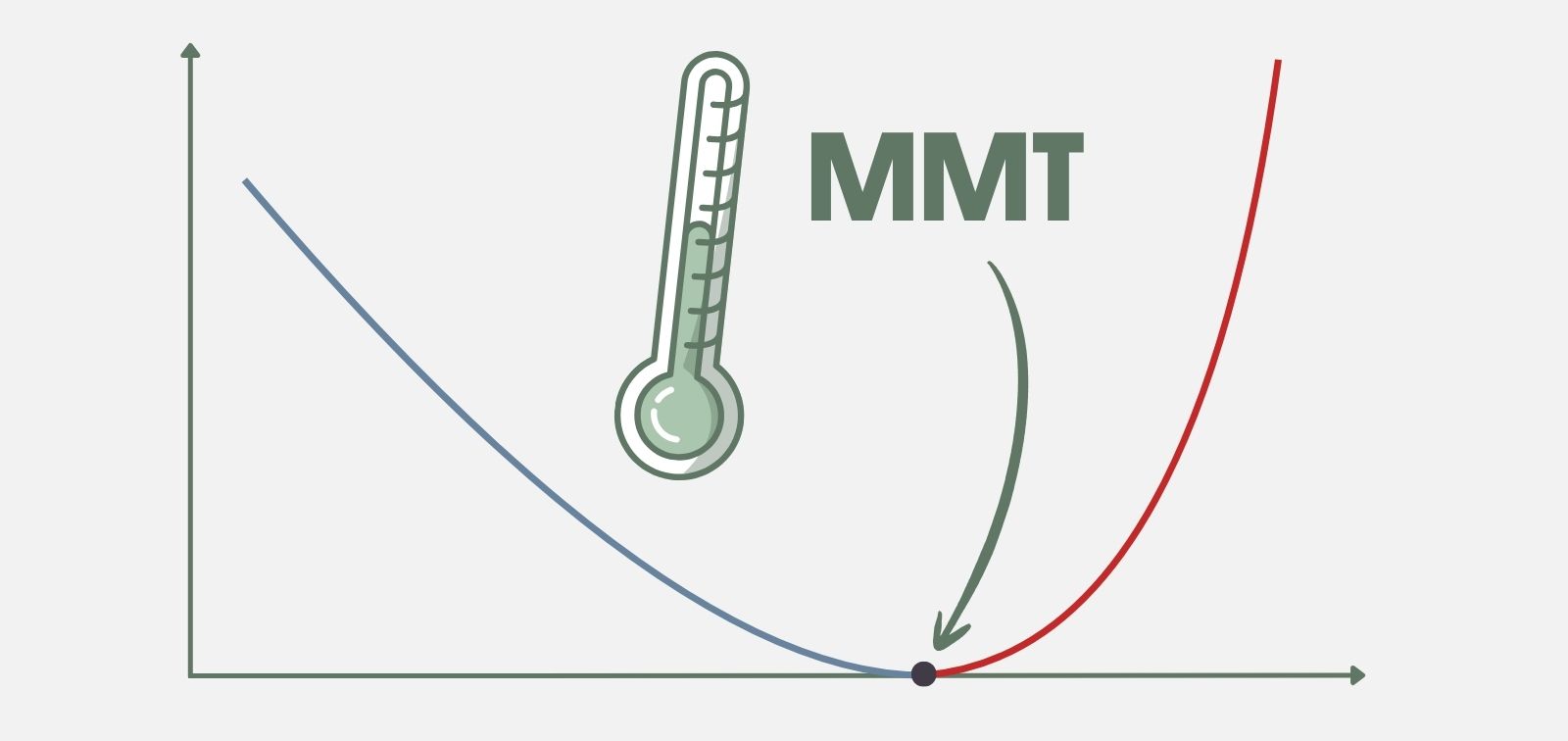
If we plot the relationship between the daily temperature (on the x-axis, horizontal) and daily mortality (on the y-axis, vertical), the resulting curve takes the shape of a “V” or a “U”.
The lowest point of the curve is known as the Minimum Mortality Temperature (MMT). Below the MMT, mortality risk generally increases as temperatures decrease, representing cold-related mortality. Above the MMT, mortality risk generally increases as temperatures rise, representing heat-related mortality.
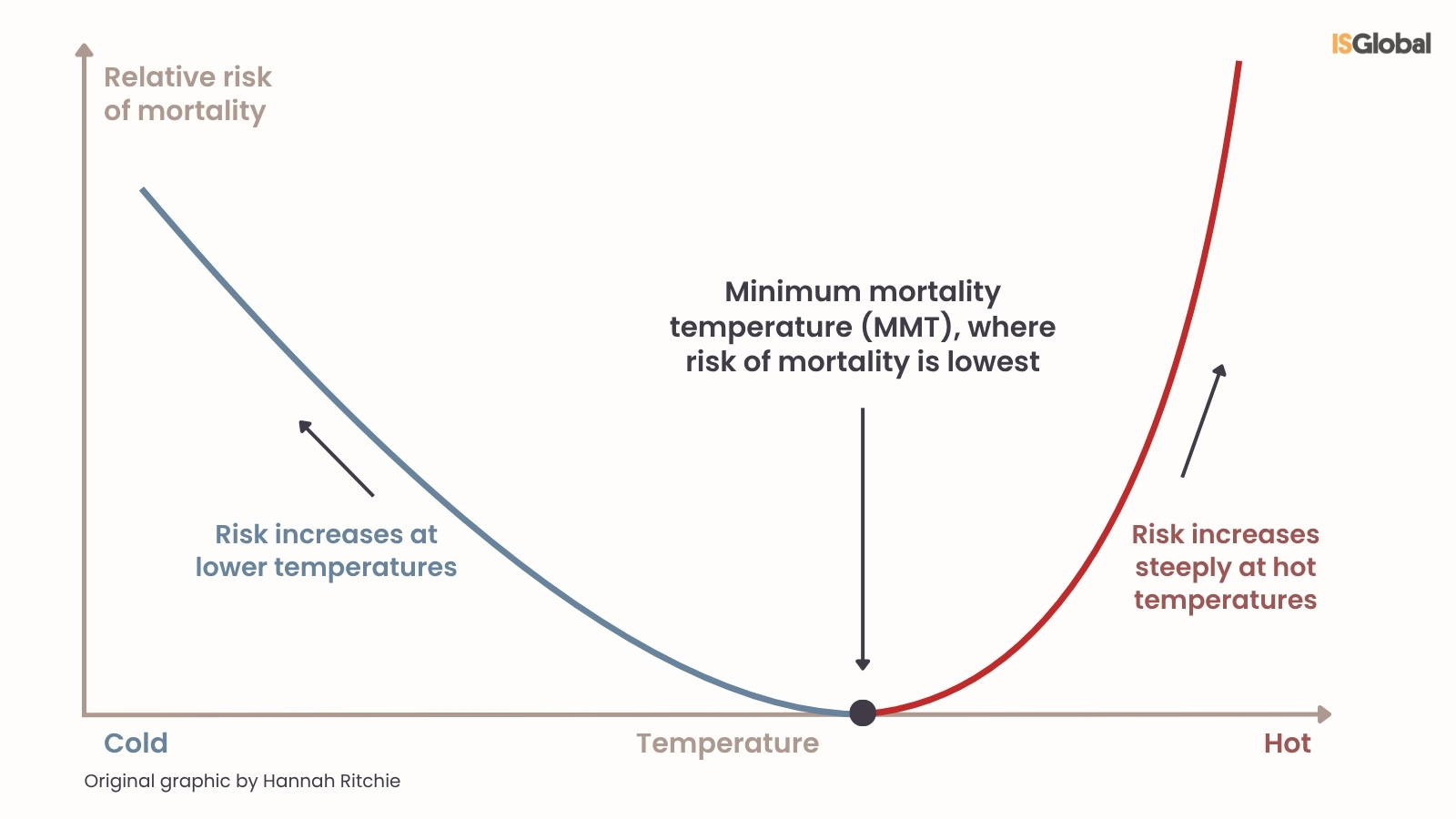
Relationship between temperature and mortality: The risk of mortality is at its lowest at the Minimum Mortality Temperature (MMT). As temperatures move away from this optimal point, the risk increases, with the rise being particularly pronounced in the face of extreme heat. (Graph: ISGlobal, based on the original graph by Hannah Ritchie).
The MMT varies by location and over time
The Minimum Mortality Temperature varies between cities and regions, as it depends on the local climate and the degree to which the population has adapted to it. The MMT is also not necessarily fixed over time – it may shift over the years as a result of various factors, including population adaptation, improvements in healthcare systems and cooling measures, heat prevention campaigns, and better thermal insulation of buildings. Cities in northern Europe have lower thresholds, typically between 15 °C and 20 °C, while cities in the south and the Mediterranean record the highest values, often between 24 °C and 28 °C.
Why is it important to know the MMT?
The Minimum Mortality Temperature is a key epidemiological indicator for estimating the health burden associated with non-optimal temperatures on the population, identifying the most vulnerable groups, and developing early warning systems and preventive measures to protect against both heat and cold.
Changes in the MMT over time can indicate shifts in the temperature–mortality relationship. An increase in the MMT may be consistent with population adaptation to rising temperatures, although other demographic, socioeconomic and healthcare-related factors may also contribute (the social determinants of health).
Several studies conducted in Spain have reported a gradual increase in the MMT across many provinces over recent decades. Although this pattern is consistent with some degree of population adaptation to rising temperatures, it cannot be interpreted as evidence of adaptation on its own. Demonstrating adaptation requires additional evidence, such as a reduction in the relative risk of heat-related mortality over time, after accounting for other factors that may influence mortality.
READ MORE
COLLAPSE
- A study quantifies for the first time in the European population the impact of socioeconomic inequality on temperature-related mortality(ISGlobal, 2026)
- Europe's Population is Adapting Better to Cold than to Heat(ISGlobal, 2025)
- Over 62,700 Deaths Associated with Record-breaking Heat During the Summer of 2024 in Europe(ISGlobal, 2025)
- Heat Caused Over 47,000 Deaths in Europe in 2023, the Second Highest Burden of the Last Decade(ISGlobal, 2024)
- Air Conditioning Has Reduced Mortality Due to High Temperatures in Spain by One Third(ISGlobal, 2023)
- A study analyses how the population is adapting to rising temperatures in Spain(Instituto de Salud Carlos III, 2021)
MULTIMEDIA MATERIAL