
Wet Bulb and Globe Temperature (WBGT)
What is Wet Bulb Globe Temperature?
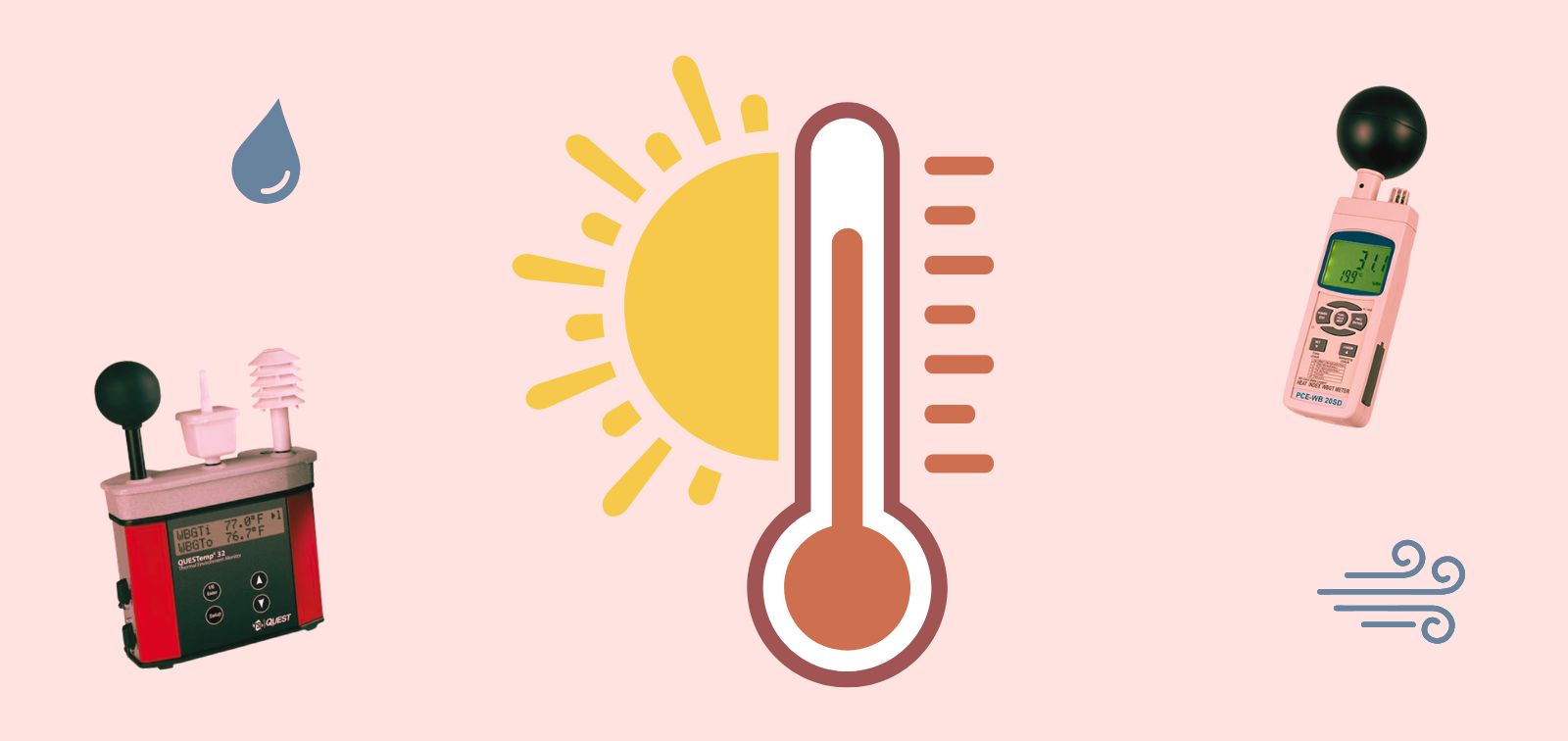
Wet Bulb Globe Temperature (WBGT) is an index used to assess heat stress on the human body. Unlike standard ambient temperature, WBGT takes into account not only air temperature, but also relative humidity, solar radiation and air movement, as all of these influence the body’s ability to dissipate heat, particularly during intense physical activity or work carried out in hot environments.
Which variables does WBGT consider?
The WBGT index combines three thermal measurements:
- Dry-bulb temperature (Td): the standard ambient air temperature measured by a conventional thermometer exposed to the air but shielded from direct radiation.
- Natural wet-bulb temperature (Tw): measured using a thermometer with its bulb covered by a wet wick and exposed to natural airflow. It reflects the effect of humidity and the body’s ability to cool itself through sweat evaporation.
- Black globe temperature (Tg): measured using a temperature sensor placed inside a matte black globe, which absorbs heat radiation. It represents the combined effects of solar radiation, radiant heat and air movement on the body.
The combination of these variables provides a more accurate representation of the real thermal conditions to which a person is exposed.
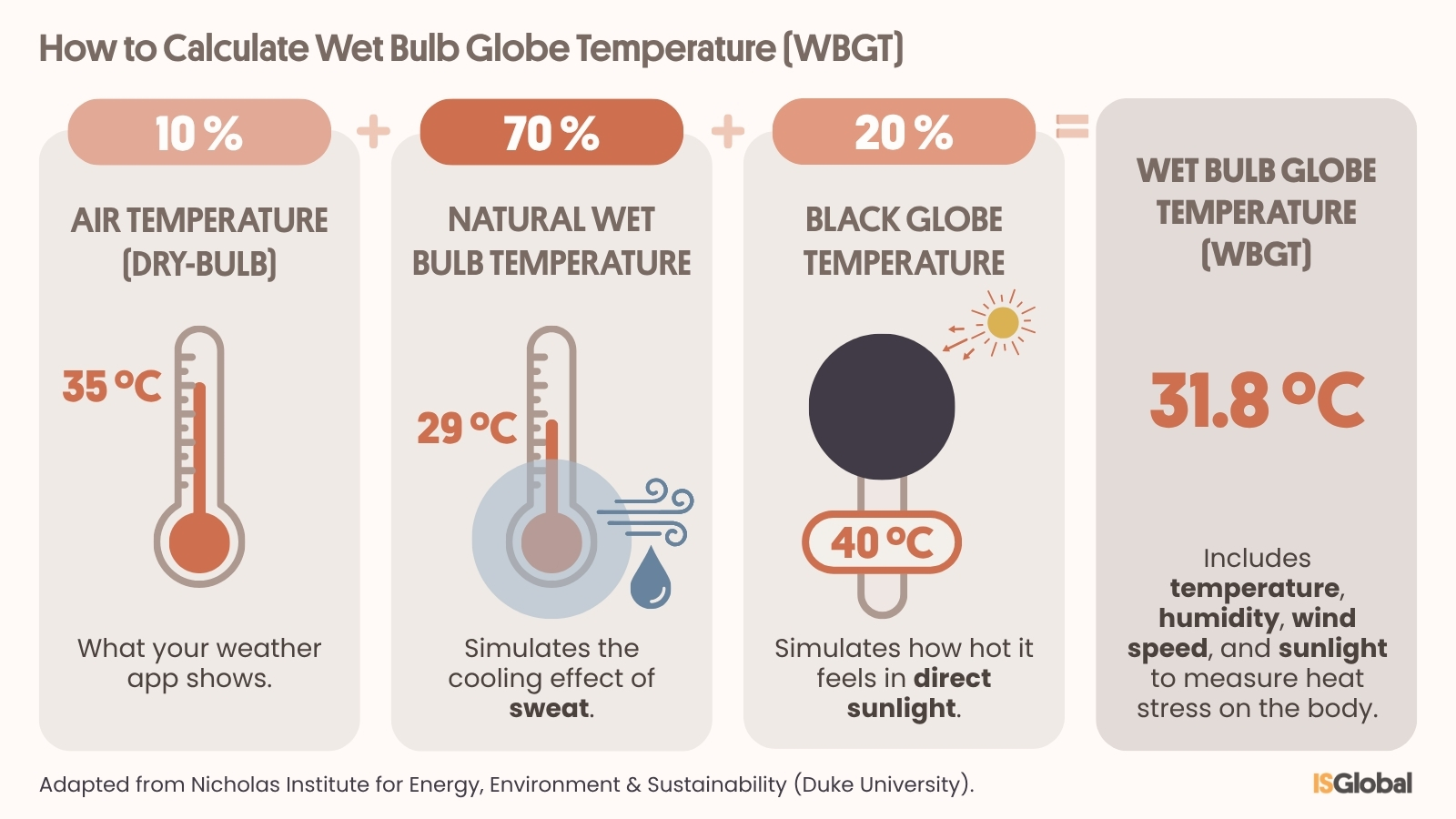
Infographic on calculating the Wet-Bulb Globe Temperature (WBGT). This index combines air temperature (10%), humidity and wind as measured by the wet-bulb (70%), and direct solar radiation as measured by the black globe (20%) to more accurately assess the actual level of heat stress experienced by the human body.
How Wet Bulb Globe Temperature (WBGT) is calculated
Outdoors, under direct sunlight exposure, WBGT is calculated using the following formula: WBGT = 0.7 × Tw + 0.2 × Tg + 0.1 × Td
Indoors, or in areas without significant solar radiation: WBGT = 0.7 × Tw + 0.3 × Tg
In the example shown in the image above: WBGT = 0.7 × 29 + 0.2 × 40 + 0.1 × 35, so WBGT = 31.8 °C
Temperatures can be expressed in either degrees Celsius or Fahrenheit, and these equations are included in international standards and technical guidelines. To determine whether the resulting WBGT value is considered safe, it is compared to the exposure limits established by occupational health and sports medicine organizations. These limits vary depending on factors such as the intensity of physical activity or workload, the individual’s metabolic rate, and their level of acclimatization to heat.
What is WBGT used for?
WBGT is used in areas such as occupational risk prevention, sport, industry and the military. Its main purpose is to estimate the risk of heat exhaustion, heatstroke and other heat-related health issues.
In workplace environments, it helps establish heat exposure limits and define preventive measures such as rest breaks, hydration or reducing physical workload during outdoor work or in hot industrial settings.
In sport, federations and medical organisations use WBGT to modify or suspend training sessions and competitions during periods of extreme heat. Likewise, some armed forces use WBGT scales to regulate physical exercise, uniforms and water consumption in extreme climates.
Wet Bulb Globe Temperature is particularly relevant in the current context of climate change, with rising global temperatures and increasingly frequent heatwaves.
The difference between WBGT and other heat indices
Other indicators, such as the heat index or apparent temperature, also assess perceived heat, but they are generally based mainly on temperature and relative humidity. WBGT, by contrast, also incorporates solar radiation and wind, providing a more comprehensive and accurate assessment of heat stress.
READ MORE
COLLAPSE
MULTIMEDIA MATERIAL