
El Niño
What is the El Niño phenomenon?
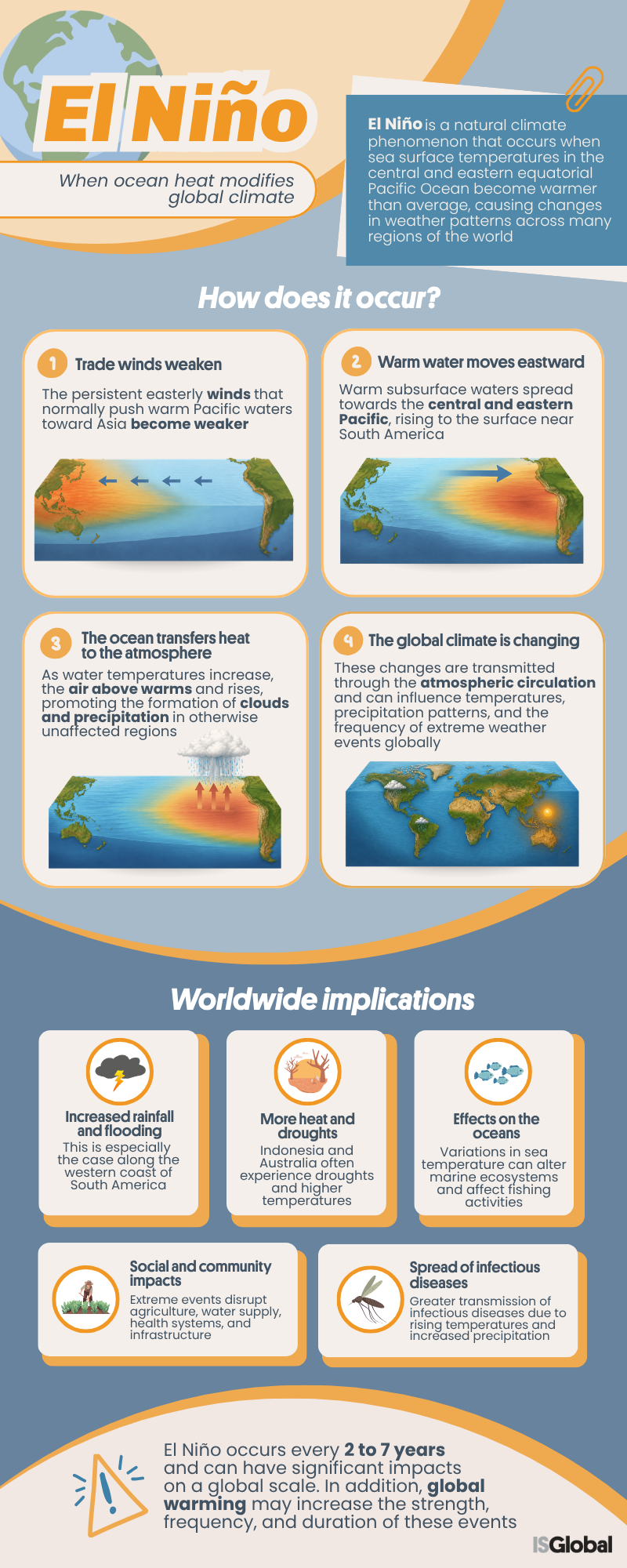
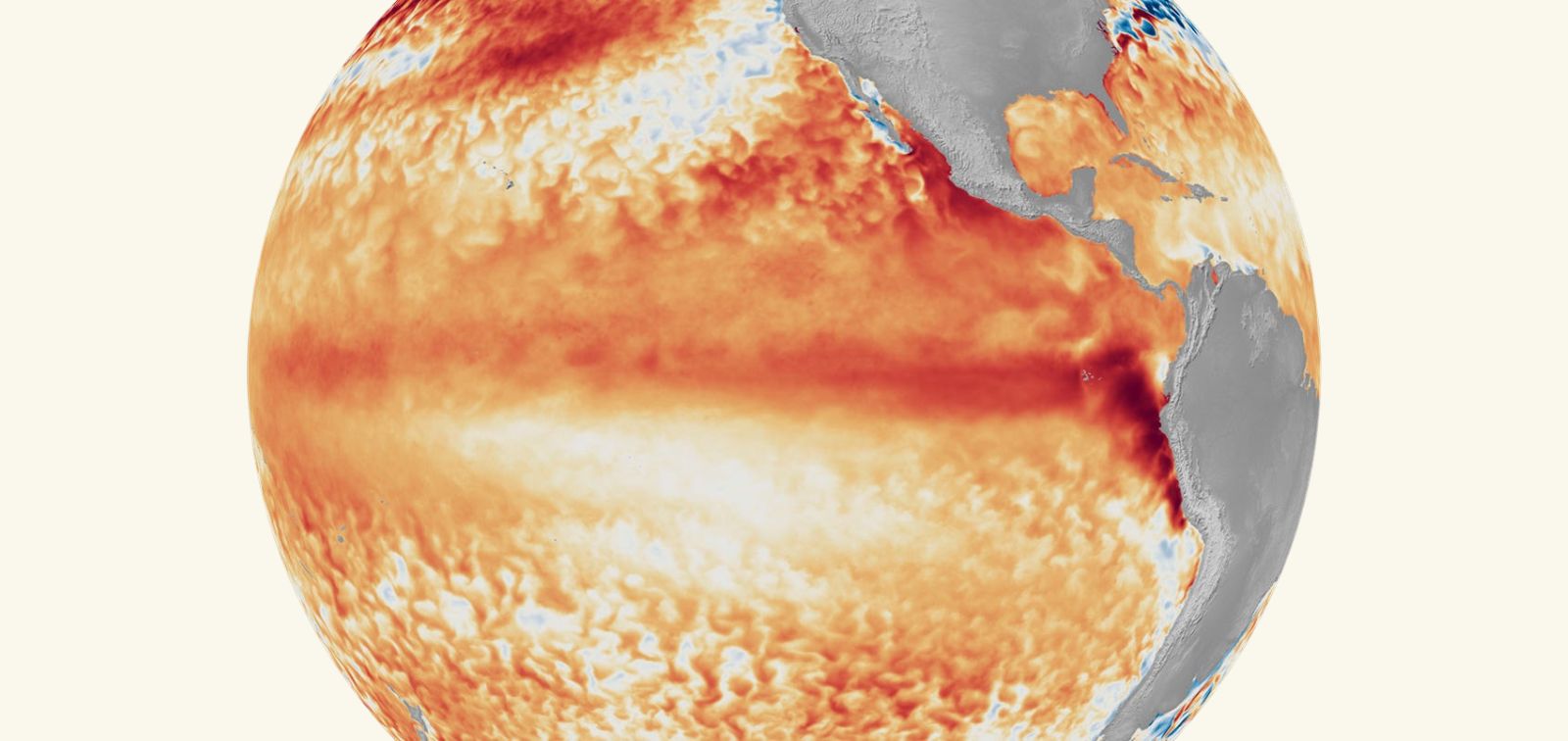
El Niño–Southern Oscillation (ENSO) is a natural climate phenomenon that results from interactions between the ocean and the atmosphere in the tropical Pacific Ocean. It occurs when surface waters in the central and eastern equatorial Pacific warm abnormally for several months, altering air circulation over the ocean. These changes are transmitted through the atmosphere to distant regions and modify rainfall and temperature patterns in different parts of the world.
Although it originates in the equatorial Pacific, its effects can be felt thousands of kilometres away. El Niño episodes (the warm phase) occur irregularly, usually every 2 to 7 years, and typically last between 9 and 12 months, although they can sometimes persist for up to 18 months. In rare cases, these episodes can last for several years.
Did you know…?
The name ‘El Niño’ was first used by fishermen off the coasts of Peru and Ecuador, who observed the arrival of unusually warm waters around Christmas and associated it with the Baby Jesus.
How does it occur?
Under normal conditions, winds that blow steadily along the equator push warm surface waters westwards across the ocean, towards Indonesia and Australia. At the same time, off the coast of South America, cold, nutrient-rich waters rise from the depths. This process, known as upwelling, sustains one of the most productive fishing grounds in the world.
During an El Niño episode, these winds weaken, change direction and blow from west to east instead of from east to west. As a result, warm waters, particularly those below the ocean surface, move towards the central and eastern Pacific, reducing the upwelling of cold water and altering the distribution of heat and moisture in the atmosphere. This change triggers shifts in atmospheric circulation that spread around the globe and affect the climate in many countries.
Consequences of El Niño
The effects of El Niño are not the same everywhere in the world and depend on the intensity and duration of each episode. In general, it causes a redistribution of rainfall and temperatures, increasing the likelihood of extreme weather events in different regions. Its main consequences include:
- Droughts and heatwaves in Australia, Indonesia, southern Africa, the Amazon region and parts of southern Asia.
- Heavy rainfall and flooding in parts of the west coast of South America, eastern Africa and the southern United States.
- Disruption of marine ecosystems, as reduced upwelling limits nutrient availability and affects fish species and fishing activity.
- Impacts on agriculture, water resources, energy production, food security and health, with significant social and economic consequences.
In addition, El Niño tends to contribute to a temporary rise in the global average temperature, on top of the increase already caused by climate change. As a result, years in which an intense episode occurs are often among the warmest on record.
El Niño and climate change
Although El Niño is a natural phenomenon, its effects can be amplified by global warming. A warmer ocean and atmosphere supply more energy and moisture to the climate system, making heavy rainfall, flooding and heatwaves associated with the phenomenon more extreme.
La Niña: the opposite phase
La Niña is the cold phase of ENSO and represents the opposite of El Niño. It is characterised by anomalously cool surface waters in the central and eastern equatorial Pacific and stronger winds that push warm waters westwards.
While El Niño tends to increase rainfall in some regions and drought in others, La Niña usually produces the opposite climate pattern, although its effects also vary depending on the region and the intensity of each episode.
Will an exceptional El Niño episode occur in 2026?
The World Meteorological Organization (WMO) considers the 2026–2027 El Niño episode to be one of the most intense observed since modern records began in 1950. Forecasts indicate a probability close to 100% that the phenomenon will remain active until February 2027 and reach very strong intensity between late 2026 and early 2027. See the WMO update.
Expected impacts include an increased risk of flooding in some regions, prolonged droughts in others, more intense heatwaves, wildfires, and consequences for agriculture, water availability and public health.
Major El Niño episodes
| Episode | Significance |
|---|---|
| 1877–1878 | One of the most intense episodes on record, associated with severe droughts and famines in different parts of the world. |
| 1982–1983 | One of the most significant episodes documented globally; it caused severe flooding and droughts across several continents. |
| 1997–1998 | Long considered one of the most intense episodes of the 20th century, with significant economic and environmental losses. |
| 2015–2016 | A very intense episode associated with an exceptional rise in the global average temperature. |
| 2026–2027 | The WMO forecasts that it will rank among the four most intense episodes on record and reach its peak in late 2026. |
READ MORE
COLLAPSE
- El Niño / La Niña(Organización Meteorológica Mundial, 2026)
- El Niño will be very strong, with more droughts, floods and extreme heat until 2027(Naciones Unidas, 2026)
- An integrated forecasting system allows for real-time El Niño-Southern Oscillation predictions more than a year in advance(ISGlobal, 2024)
- A Climate Model Developed by ISGlobal Researchers Provides Long-Term Predictions of ‘El Niño’ Events(ISGlobal, 2019)
MULTIMEDIA MATERIAL