

Metabolic syndrome

What is metabolic syndrome?
Metabolic syndrome is a cluster of metabolic abnormalities that increase the risk of developing cardiovascular disease, stroke, type 2 diabetes and metabolic dysfunction-associated steatotic liver disease (MASLD), among other conditions. It includes high blood pressure, elevated blood glucose levels (usually associated with insulin resistance), excess abdominal fat, and abnormal cholesterol and/or triglyceride levels.
Metabolic syndrome has a multifactorial origin and is mainly associated with excess body fat, due to an unhealthy diet and physical inactivity, ageing, and genetic and environmental factors. Its prevalence has increased worldwide over recent decades, particularly in high-income countries, but more recently also in low- and middle-income countries.
How does insulin resistance develop?
Insulin resistance is one of the central mechanisms underlying metabolic syndrome. It occurs when the body’s cells (mainly those in the muscles, liver and adipose tissue) become less responsive to the action of insulin, the hormone responsible for enabling glucose to move from the bloodstream into the cells. As a result, the body needs to produce increasing amounts of insulin to maintain normal blood glucose levels.
The most common cause is an excess of body fat, especially in the abdominal area. This adipose tissue not only stores energy but also releases fatty acids and signalling molecules that promote a state of chronic low-grade inflammation. This impairs the cells’ response to insulin and makes it more difficult for them to absorb glucose.
Insulin resistance not only promotes the development of type 2 diabetes. It also contributes to high blood pressure, abnormal blood lipid levels and cardiovascular disease, making it a key factor in metabolic syndrome.
Risk factors
Several factors can increase the risk of metabolic syndrome, including physical inactivity, an unhealthy diet, insufficient or poor-quality sleep, smoking and alcohol consumption.
Exposure to these factors during pregnancy may also influence the metabolic health of the fetus. Various ISGlobal studies are investigating how air pollution and exposure to endocrine disruptors during pregnancy and the first years of life could increase the risk of developing metabolic syndrome later in life, as well as the possible protective effect of green spaces.
People who work rotating or night shifts are also at greater risk due to disruption of the circadian rhythm, which affects glucose metabolism and reduces insulin sensitivity.
Other risk factors include age, sex—with women being at greater risk after menopause—family history, and certain medical conditions, including polyendocrine metabolic ovarian syndrome (PMOS). In addition, social determinants of health, such as low socioeconomic status, together with commercial influences like the marketing of ultra-processed foods and alcohol, can make it more difficult to adopt healthy lifestyle habits, thereby increasing the risk of developing metabolic syndrome.
Diagnosis of metabolic syndrome
There is no single internationally accepted definition of metabolic syndrome. Although the World Health Organization (WHO), the International Diabetes Federation (IDF) and the National Cholesterol Education Program (NCEP ATP III) have proposed slightly different diagnostic criteria, they are all based on the combined presence of multiple of the following risk factors:
- Excess abdominal fat (central obesity).
- High blood pressure.
- High blood glucose levels or the presence of type 2 diabetes.
- Elevated triglyceride levels.
- Low HDL cholesterol (“good cholesterol”).
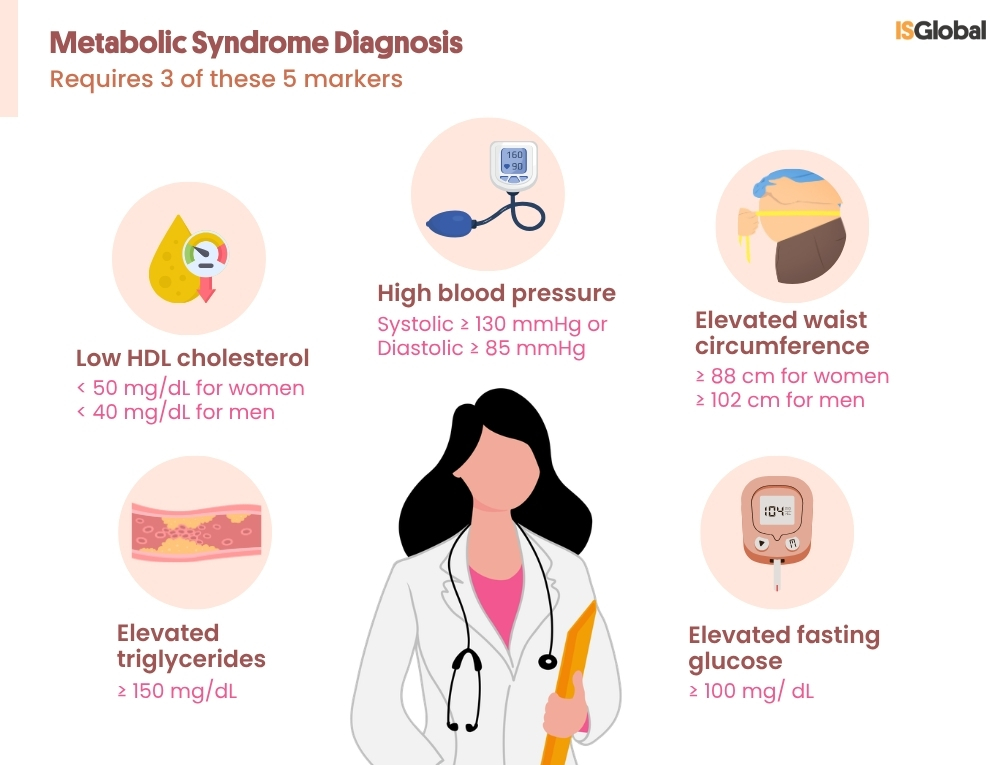
Diagnosis of metabolic syndrome: This is confirmed when a person has at least 3 of the 5 risk factors listed (abnormal values for glucose, HDL cholesterol, triglycerides, blood pressure or waist circumference).
Treatment of metabolic syndrome
The treatment of metabolic syndrome is based on societal and lifestyle changes. Losing weight through diet modification and regular physical activity, for example, can help improve insulin sensitivity and normalise blood pressure, blood glucose levels and the lipid profile. When these changes are not sufficient, medication can be added to manage each of the underlying abnormalities.
Prevention of metabolic syndrome
Preventing metabolic syndrome is based on adopting healthy lifestyles, which is facilitated by addressing the social and commercial determinants of health. This includes maintaining a healthy weight, engaging in regular physical activity, following a diet rich in vegetables, fruit, pulses, whole grains and low-fat dairy products, not smoking, limiting alcohol consumption, and aiming to get good-quality sleep. The World Health Organization (WHO) Best Buys provide a set of cost-effective and other effective interventions that governments can use to address the aforementioned risk factors.
READ MORE
COLLAPSE
- Exposure to Mixtures of Endocrine-disrupting Chemicals During Pregnancy Is Associated with Higher Odds of Metabolic Syndrome in Children(ISGlobal, 2024)
- Urban Areas With High Levels of Air Pollution, Traffic and Noise May Increase Risk of Childhood Obesity(ISGlobal, 2021)
- Chromosomal Variants Help Explain Why People With Obesity Often Develop Diseases Such as Asthma and Diabetes(ISGlobal, 2020)
- People Living Near Green Spaces Are at Lower Risk of Metabolic Syndrome(ISGlobal, 2019)
MULTIMEDIA MATERIAL