

COPD
What is COPD?
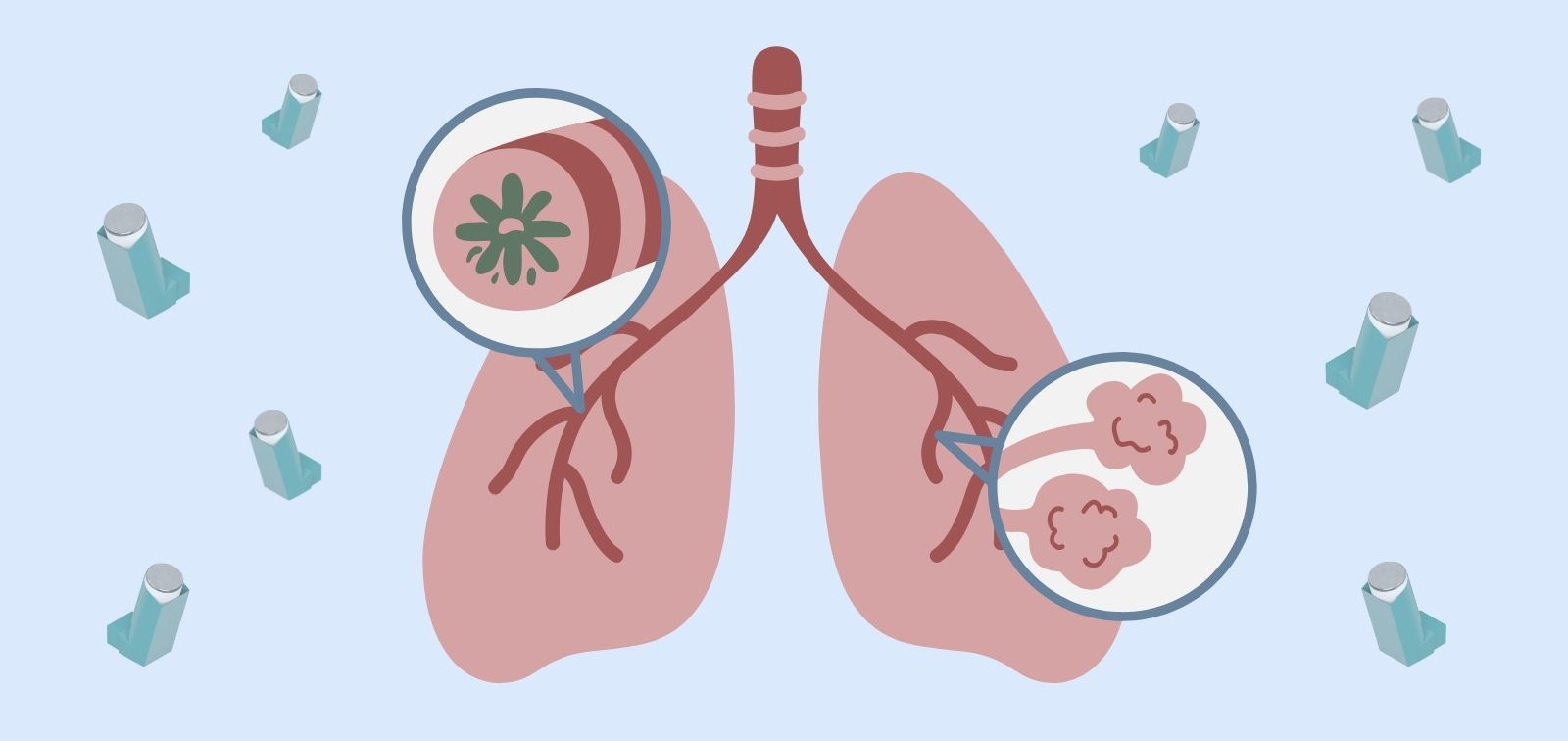
Chronic obstructive pulmonary disease (COPD) is a chronic respiratory condition in which the lungs and airways undergo progressive damage, making it difficult for air to flow out of the lungs and causing breathing to require much greater effort.
COPD includes two conditions that may occur together, although their severity varies from person to person: chronic bronchitis and emphysema. Chronic bronchitis is the persistent inflammation of the airways, which hinders both the entry and exit of air. Emphysema, on the other hand, damages the alveoli, the tiny air sacs located at the end of the bronchi where oxygen passes into the bloodstream. When the alveoli become damaged, the lungs lose their ability to oxygenate the body effectively. Together, both conditions make it increasingly difficult to breathe normally.
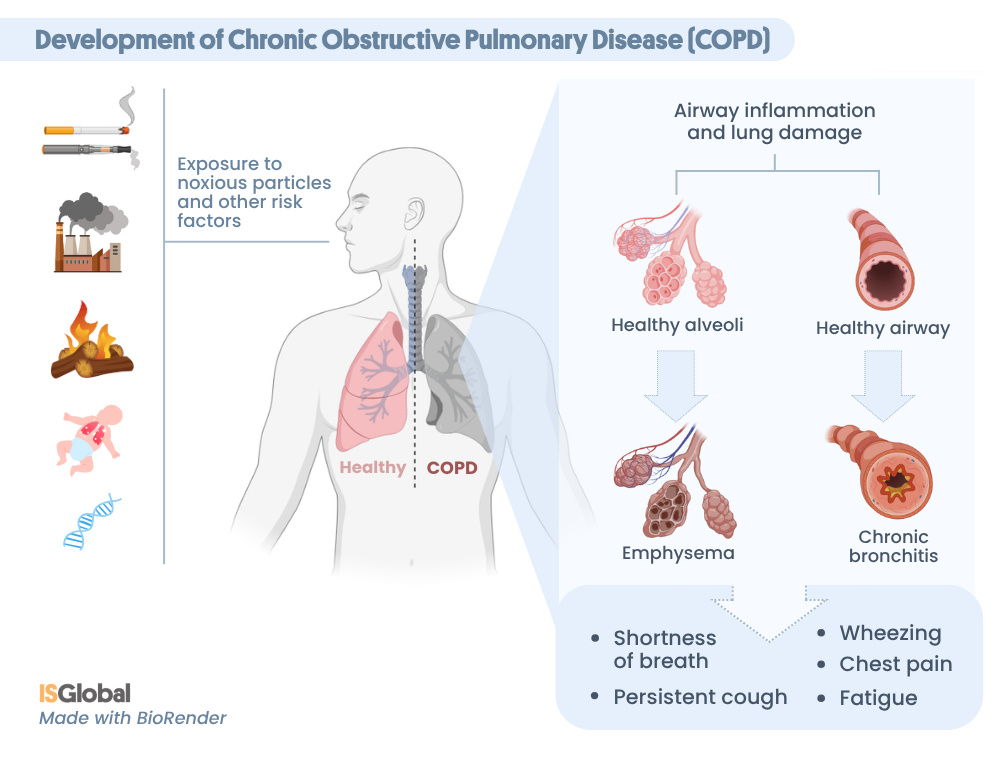
COPD is mainly caused by exposure to tobacco smoke, which damages the lungs and causes inflammation of the airways (leading to the transformation of healthy alveoli and airways into emphysema and chronic bronchitis, respectively). The main symptoms include shortness of breath and a persistent cough.
Symptoms of COPD
Symptoms of COPD usually develop gradually and typically appear from middle age onwards. In many cases, they do not become noticeable until significant lung damage has already occurred.
- Shortness of breath (dyspnoea), especially during physical activity. As the disease progresses, it may occur even when carrying out simple tasks or while at rest.
- Persistent cough, often accompanied by mucus or phlegm (also known as sputum, which is brought up when coughing). For many people, this is one of the earliest symptoms.
- Wheezing, a whistling sound heard in the chest when breathing.
- A feeling of tightness in the chest.
- Fatigue or lack of energy, which can make everyday activities more difficult.
People with COPD may also experience exacerbations or flare-ups, which are episodes in which symptoms suddenly worsen for several days. These episodes are often associated with respiratory infections or exposure to air pollutants and irritants.
Having COPD also increases the risk of developing other conditions, including lung infections (influenza and pneumonia), lung cancer, heart disease, osteoporosis and mental health problems.
Risk factors
In most cases, COPD is linked to long-term exposure to toxic substances or irritants that damage the lungs. In high-income countries, the main risk factor is smoking, including both active and passive smoking, as well as air pollution and occupational exposure to dust or chemicals. In many low- and middle-income countries, however, exposure to smoke from wood, coal or other household fuels is also highly relevant.
Other factors can affect normal lung development from the very beginning of life, including exposure to pollutants during foetal development, premature birth and severe respiratory infections in childhood. As a result, people whose lungs have developed abnormally may also develop COPD in adulthood.
In a small number of cases, COPD is caused by an inherited genetic condition known as alpha-1 antitrypsin deficiency, which increases susceptibility to lung damage.
Did you know…?
According to the World Health Organization (WHO), smoking accounts for more than 70% of COPD cases in high-income countries. In low- and middle-income countries, it accounts for 30–40% of cases.
Diagnosis of COPD
The spirometry test is the key test used to diagnose COPD, as it helps identify abnormalities in lung function. It is a simple, quick and painless procedure that measures both the amount of air a person can inhale and exhale and the speed at which air is expelled from the lungs.
During the test, which usually takes around 10 minutes, the patient is asked to fill their lungs completely and then blow out all the air as quickly and forcefully as possible into a device called a spirometer. The results are available immediately.
Treatment of COPD
Although COPD cannot be cured, treatment helps relieve symptoms, improve quality of life and slow the progression of the disease. For people who smoke, quitting smoking is essential, as it is the most effective intervention for slowing disease progression.
Inhaled medications help to open the airways and make breathing easier. Pulmonary rehabilitation, which includes supervised exercise, education about the disease and the promotion of physical activity, helps people carry out everyday activities with less breathlessness and fatigue. In more advanced cases, long-term oxygen therapy at home may be required.
It is also important to prevent exacerbations through vaccination and the effective management of respiratory infections.
Beyond treatment with inhalers, following a healthy diet and, above all, increasing daily physical activity can significantly improve the course of the disease, reducing exacerbations, hospital admissions and the risk of death by more than half.
READ MORE
COLLAPSE
- A Study Characterises for the First Time How People with COPD Walk, Beyond How Much They Walk(ISGlobal, 2025)
- Study Shows How Air Pollution and Weather Influence Daily Physical Activity in People with COPD(ISGlobal, 2024)
- Research Shows Worrying Trend in Women’s COPD Rates in Catalonia, Cantabria and the Baleares(ISGlobal, 2022)
- Study Shows How Urban Environment Influences Physical Activity in COPD Patients(ISGlobal, 2022)
- Less Air Pollution and More Access to Green or Blue Spaces: A Recipe to Improve the Life Quality of People with COPD(ISGlobal, 2021)
- Study Associates Regular Vigorous Physical Activity With Improved Cardiac Response to Exercise in People with COPD(ISGlobal, 2021)
- Study Validates Two Tools for Measuring Physical Activity in COPD Patients(ISGlobal, 2021)
- Both Moderate and Severe Exacerbations Accelerate Physical Activity Decline in COPD Patients(ISGlobal, 2018)
MULTIMEDIA MATERIAL