
Urban Heat Island
What is an urban heat island?
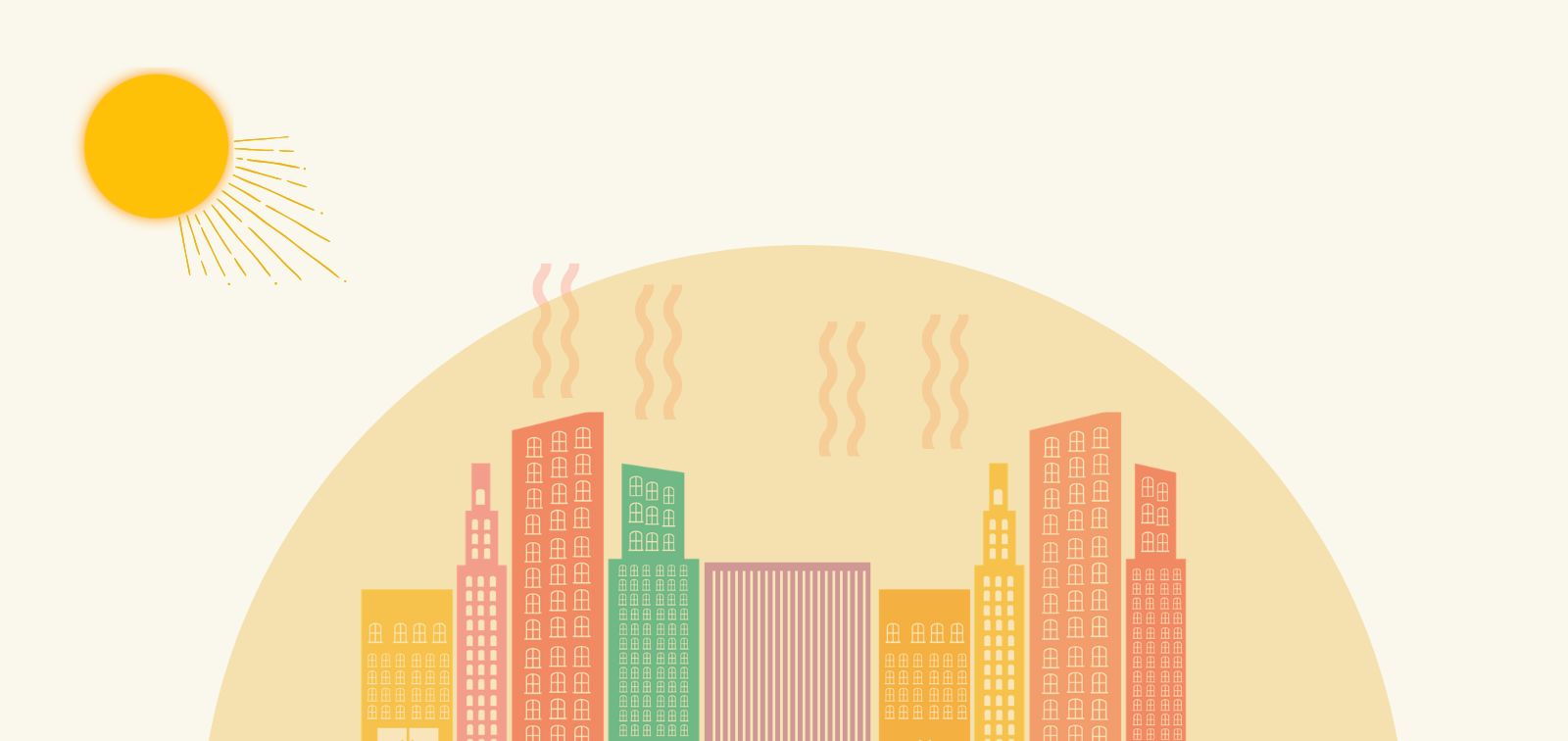
The urban heat island (UHI) effect refers to the increase in temperature in urban areas compared with nearby rural or peri-urban zones. It occurs because cities absorb and retain more heat than natural environments due to the abundance of buildings, asphalt and other impermeable surfaces.
This phenomenon is particularly strong at night. While rural areas cool down more quickly after sunset, urban materials slowly release the heat accumulated during the day, keeping temperatures higher in city centres.
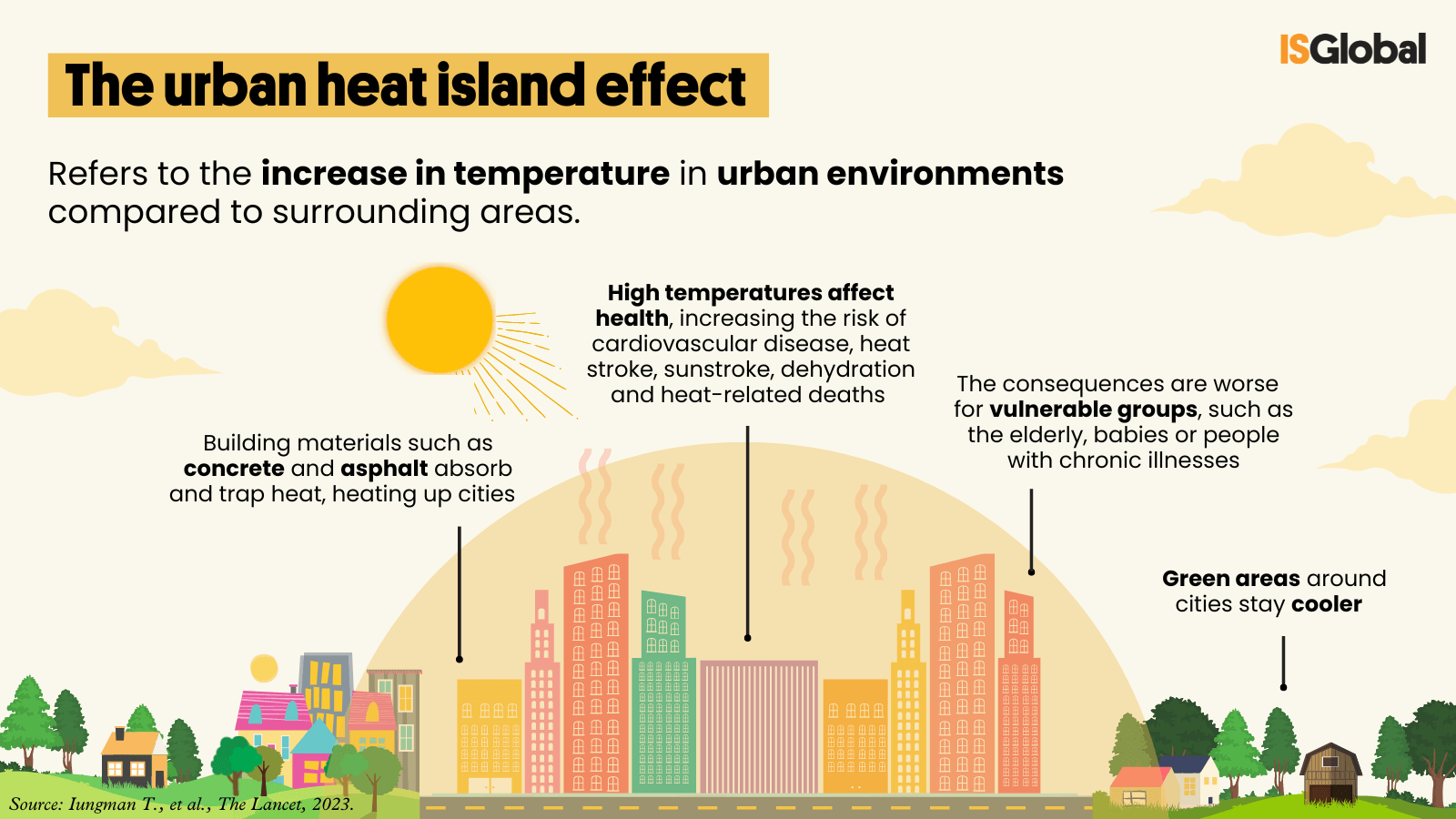
An infographic based on a study published in The Lancet (2023) illustrating how concrete and tarmac trap heat in cities, affecting the most vulnerable groups in particular.
What causes an urban heat island?
Urban heat islands arise from a combination of factors linked to urban design, construction materials and human activity. Climate change and urban growth intensify the phenomenon and increase the frequency of heatwaves and other extreme events that affect health and quality of life.
Heat accumulation in urban materials and lack of green space
The main cause is the build-up of heat in artificial surfaces such as buildings, pavements and roads, which absorb large amounts of solar radiation and release it slowly at night. Dark surfaces, especially asphalt, further increase heat absorption and raise urban temperatures.
This is compounded by a lack of vegetation and green areas, which reduces natural cooling through evapotranspiration and tree shade. In a study led by ISGlobal in 2023, it was estimated that more than 4% of summer mortality in European cities is linked to urban heat islands, and that greater tree cover could prevent a significant share of these deaths.
Urban density and city morphology
High urban density also contributes to the problem, as tall, closely spaced buildings restrict air circulation and reduce natural ventilation. In addition, traffic, industry and cooling systems generate additional heat and increase air pollution, making it easier for heat to become trapped within the city.
Negative effects of urban heat islands
- Health impact: High urban temperatures increase the risk of premature mortality and cardiovascular, respiratory and kidney diseases, as well as heatstroke and dehydration, particularly among older adults, children and vulnerable groups. These risks become more severe during heatwaves. Heat islands also reduce thermal comfort and disrupt sleep.
- Higher energy demand: Rising urban temperatures lead to greater use of air conditioning and cooling systems, increasing electricity consumption and associated emissions.
- Air pollution: High temperatures promote the formation of pollutants such as ground-level ozone, worsening air quality in cities.
- Economic impact: Heat islands generate higher healthcare, energy and infrastructure costs.
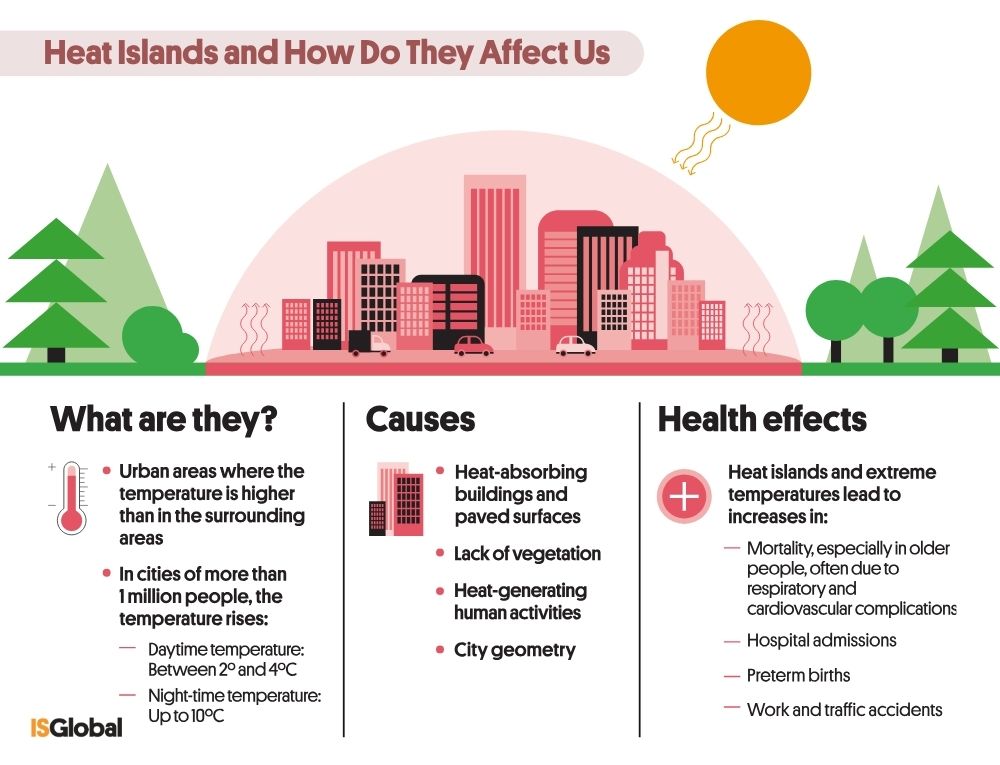
Causes of the urban heat island phenomenon and its direct impact on increased mortality and hospital admissions.
Mitigation strategies
One way to mitigate the urban heat island effect is to promote a more sustainable, climate-adapted city model. This includes measures such as bioclimatic building design, meaning buildings that make use of natural resources like sun and wind to reduce reliance on mechanical cooling systems. Other approaches include the use of reflective materials, green roofs and permeable pavements, as well as increasing green spaces, tree cover and other forms of urban shading.
In addition, promoting sustainable mobility and developing more compact, resilient urban models that integrate nature-based solutions helps reduce both heat emissions and pollution. In this context, public policy and environmental incentives play a key role in accelerating cities’ adaptation to climate change and reducing the impacts of heat islands on health and quality of life.
READ MORE
COLLAPSE
- New Index Ranks 917 European Cities on Urban Design for Health and Well-Being(ISGlobal, 2025)
- Compact cities have lower carbon emissions, but poorer air quality, less green space and higher mortality rates(ISGlobal, 2024)
- Over 4% of Summer Mortality in European Cities is Attributable to Urban Heat IslandsOver 4% of Summer Mortality in European Cities is Attributable to Urban Heat Islands(ISGlobal, 2023)
- Living in Greener Areas Is Associated With Better Mental Health and Less Medication Use(ISGlobal, 2022)
MULTIMEDIA MATERIAL