
Zoonoses
What is a zoonosis?
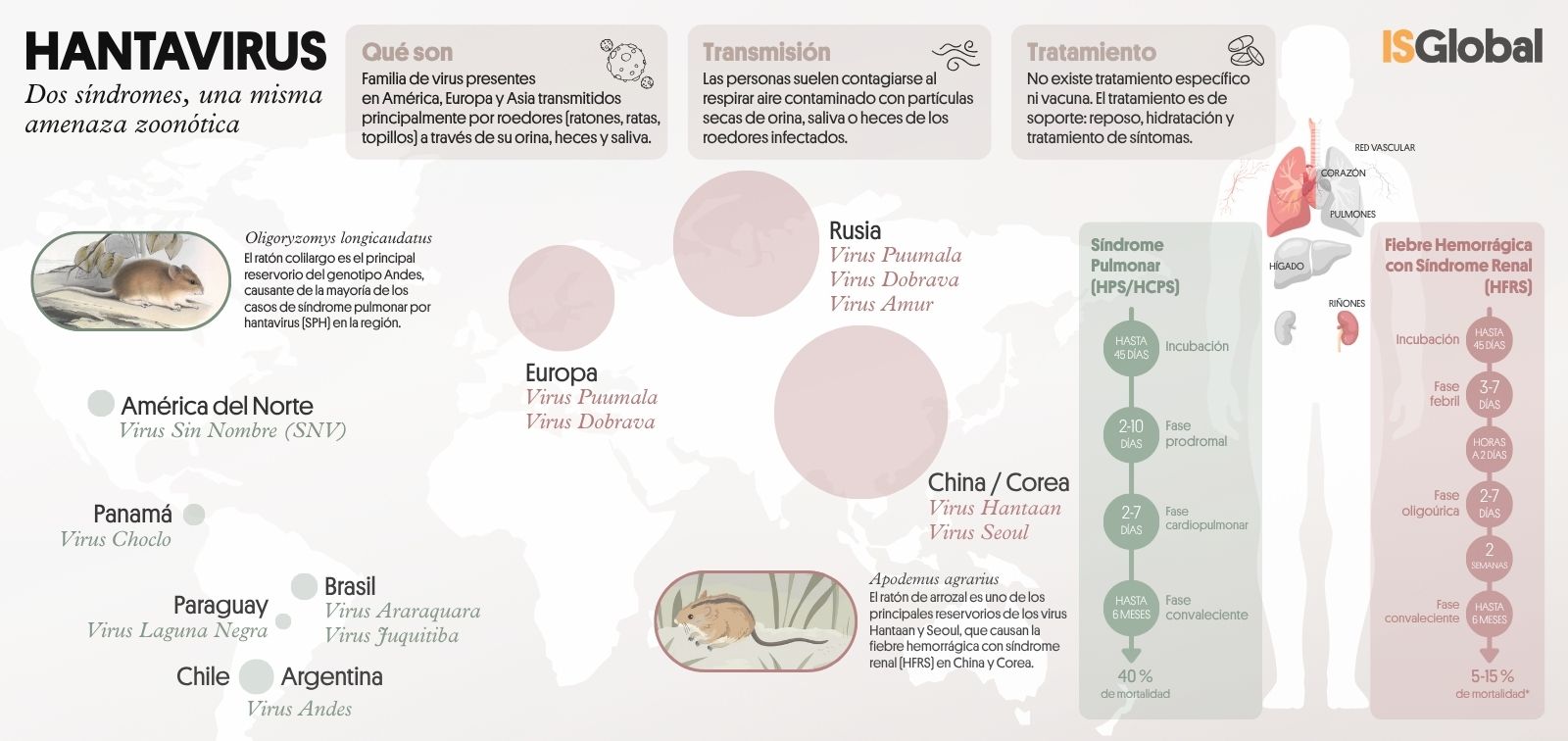
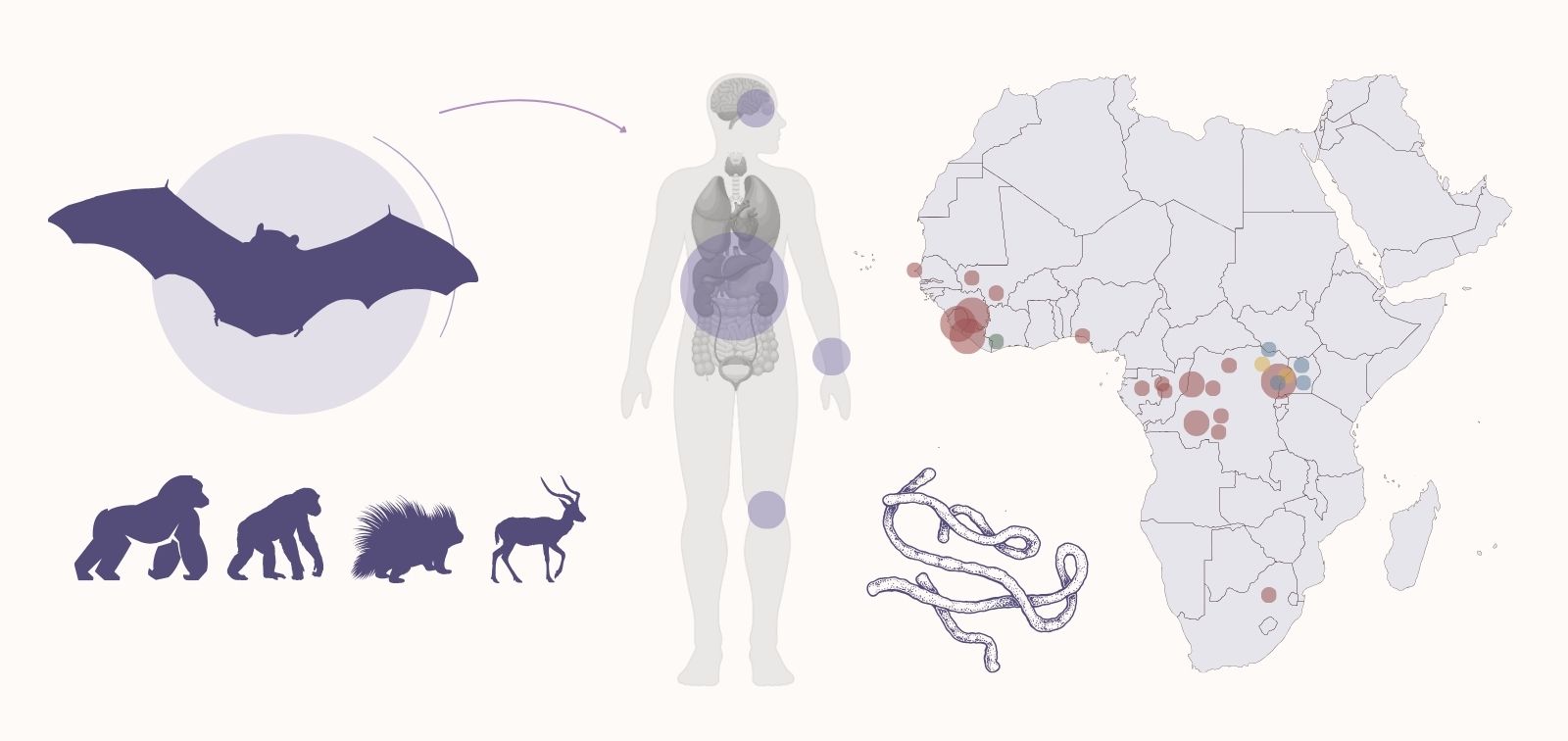
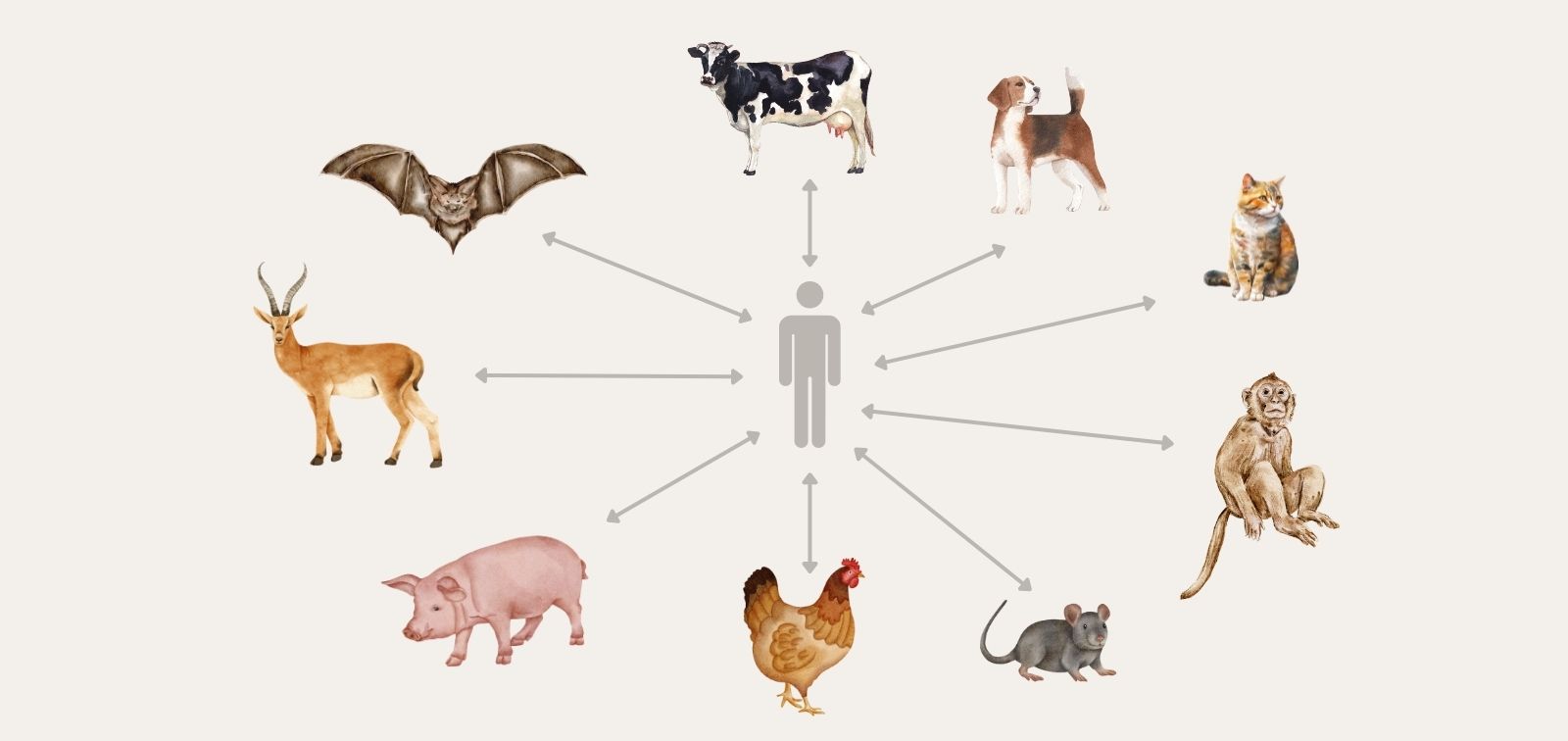
Zoonoses are infectious diseases transmitted from vertebrate animals to humans. They are caused by viruses, bacteria, fungi or parasites, and represent a major threat to public health due to the close interaction between people and animals in agriculture, livestock farming, domestic settings and natural ecosystems. According to estimates from the World Health Organization (WHO), more than 60% of pathogens affecting humans are of zoonotic origin, as are 2 out of every 3 emerging infectious diseases. Some infections, such as HIV, began as zoonoses and later evolved to enable human-to-human transmission. Other pathogens can cause major outbreaks, such as Ebola, and even lead to pandemics, such as HIV or COVID-19.
Routes of transmission of zoonoses
Zoonoses involve direct or indirect contact with infected animals, their secretions, or a contaminated environment. A single zoonosis may be transmitted through more than one route, which makes control more difficult.
Zoonoses transmitted through direct contact
Transmission occurs through direct contact with infected animals or their bodily fluids, such as saliva, blood, urine, faeces or respiratory secretions. It may happen through bites, scratches or even during the handling of animal tissues. One example is rabies, transmitted through the bite of animals such as dogs, cats or bats.
Zoonoses transmitted through food and water
Infection is acquired by ingesting contaminated food or water. Main sources include raw or undercooked meat, unpasteurised milk and dairy products, contaminated eggs, and food exposed to faeces from infected animals. Common examples include salmonellosis, brucellosis, trichinellosis and toxoplasmosis. These diseases can affect large numbers of people at once when contamination enters the food chain.
Zoonoses transmitted by vectors
Infectious agents require the involvement of a biological vector, an intermediary between the animal reservoir and humans. These vectors include mosquitoes, sandflies (small mosquito-like insects), ticks and fleas. Notable examples include leishmaniasis, which affects dogs and is transmitted to humans via sandflies, and Lyme disease, which affects small rodents and is transmitted by ticks.
Zoonoses transmitted through airborne routes
Airborne transmission occurs through inhalation of aerosols, droplets or contaminated particles originating from animal secretions, excretions or tissues. Psittacosis, caused by Chlamydia psittaci and associated with infected birds, is one example.
Zoonoses transmitted indirectly via the environment and fomites
Some zoonotic pathogens can persist in the environment and be transmitted through contaminated objects, surfaces or materials (known as fomites), as well as through contact with soil, water or facilities where infected animals have been present.
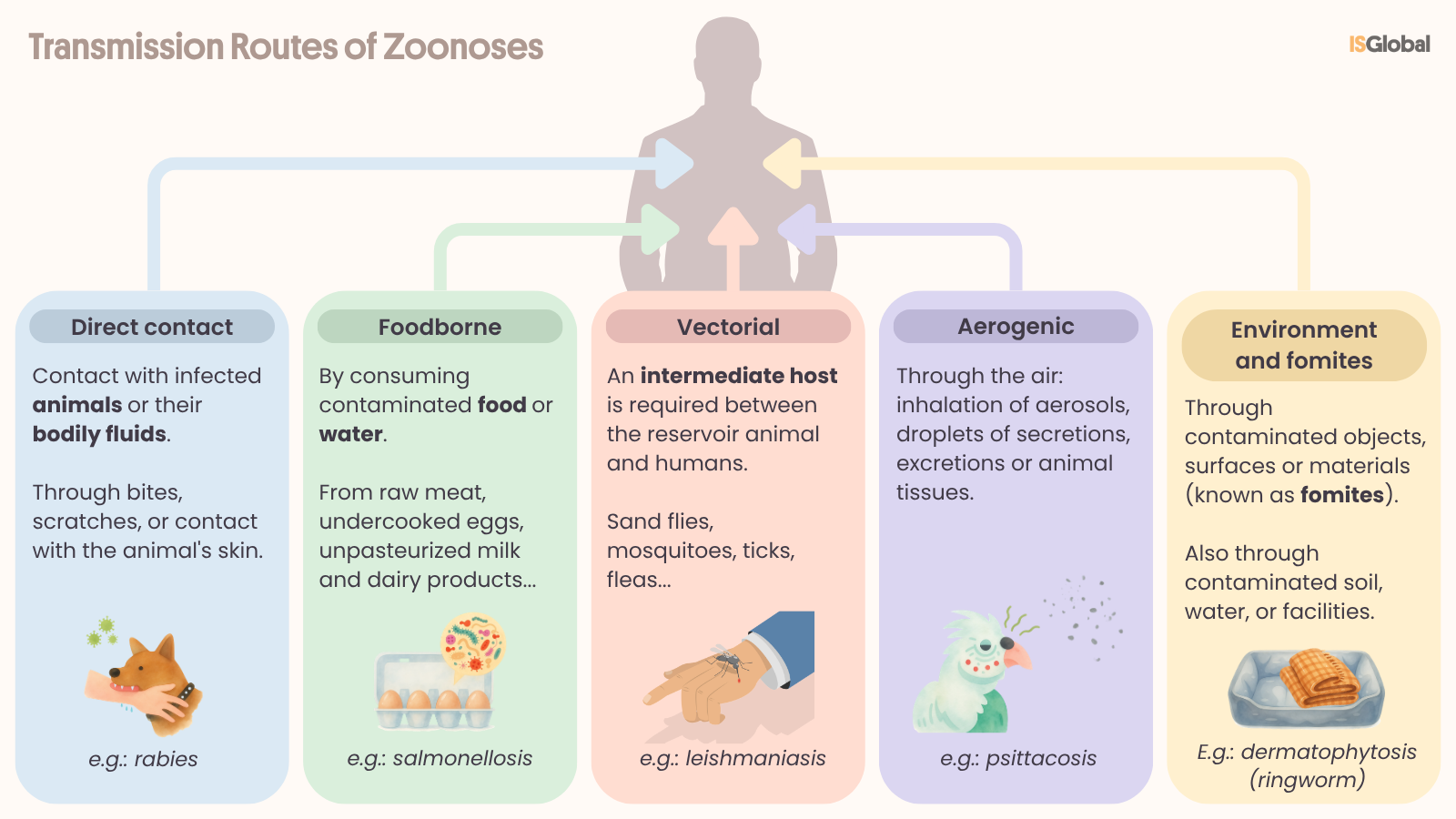
Main routes of transmission for zoonoses: direct contact with infected animals, contaminated food or water, biological vectors, aerosols, and fomites (contaminated objects or surfaces).
Factors that favour the emergence of zoonoses
Deforestation and the encroachment on natural habitats increase contact between humans and wildlife, facilitating the transmission of pathogens. Similarly, intensive livestock farming, global trade, and the mobility of people and animals enable the rapid worldwide spread of these diseases. Climate change also plays a key role, as it alters the distribution of vectors such as mosquitoes and ticks, allowing certain diseases to appear in new regions.
Prevention and control
Prevention of zoonoses is based on reducing contact with sources of infection and maintaining proper hygiene and health control measures. Key recommendations include washing hands after handling animals, consuming properly cooked food, using safe drinking water, and ensuring sanitary control in livestock farms. Epidemiological and veterinary surveillance allows early detection of potential outbreaks and helps limit their spread. In addition, responsible use of antibiotics is essential to prevent the emergence of resistant microorganisms.
The Importance of the One Health Approach
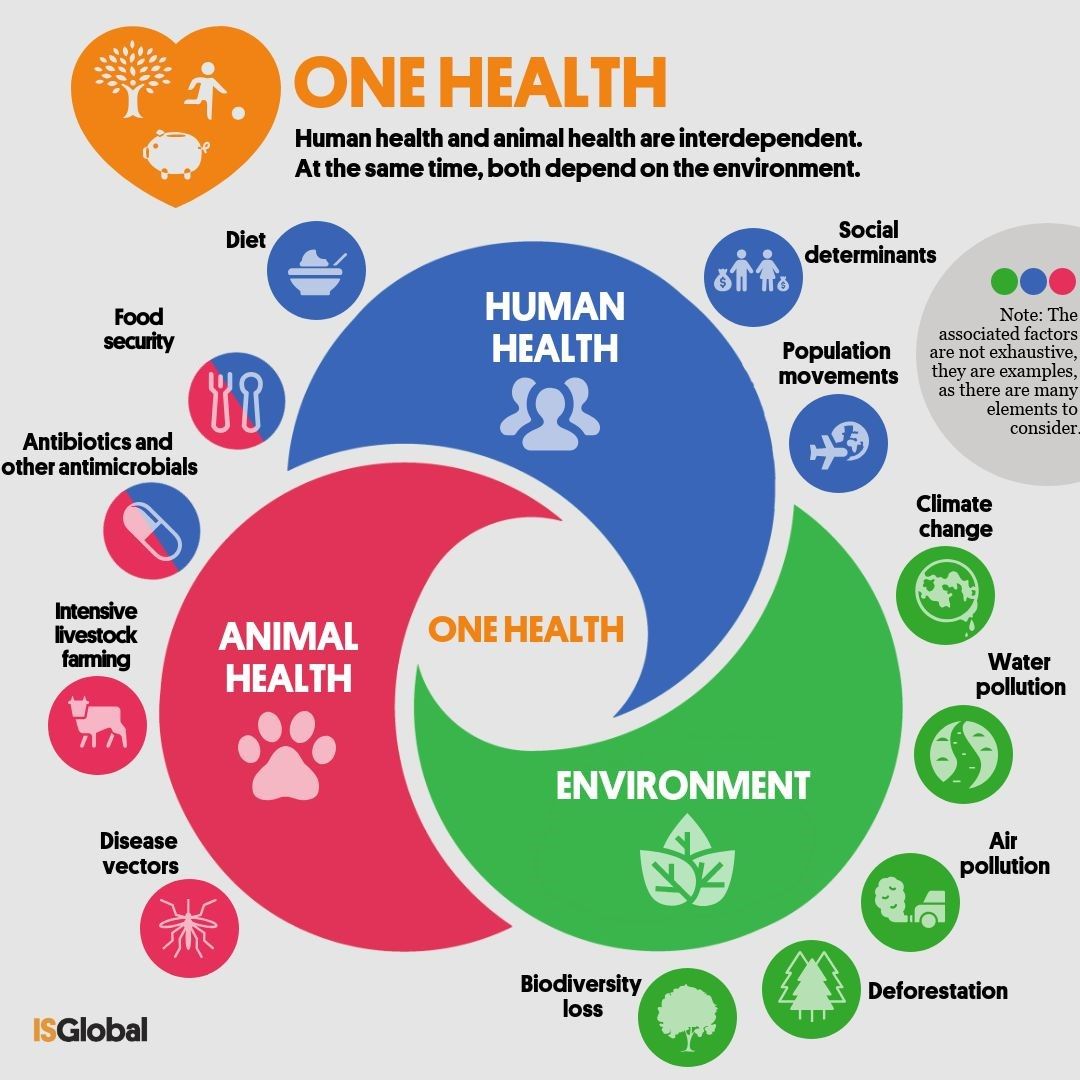
The prevention of zoonoses requires a comprehensive approach based on the One Health concept, which recognizes the close relationship between human health, animal health, and the environment, and views them as interdependent. Collaboration among professionals in these three fields is essential for the prevention and control of zoonoses.
READ MORE
COLLAPSE
MULTIMEDIA MATERIAL