
Aedes albopictus
What is Aedes albopictus or Asian tiger mosquito?
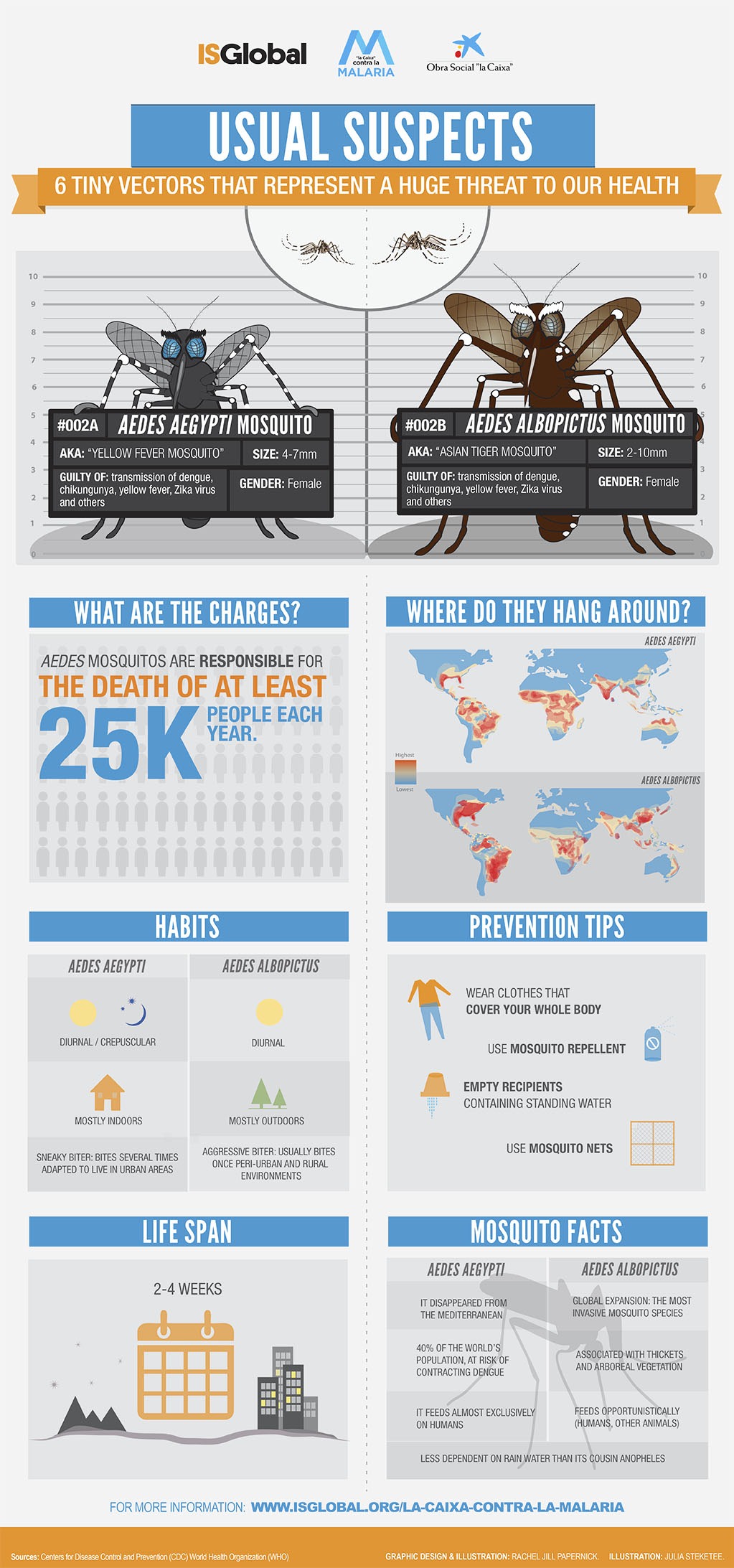
Aedes albopictus, commonly known as the (Asian) tiger mosquito, is a mosquito species belonging to the genus Aedes and native to Southeast Asia. Over recent decades, it has spread to numerous countries and has become one of the invasive species of greatest public health concern due to its ability to transmit several viruses.
What does the Asian tiger mosquito look like?
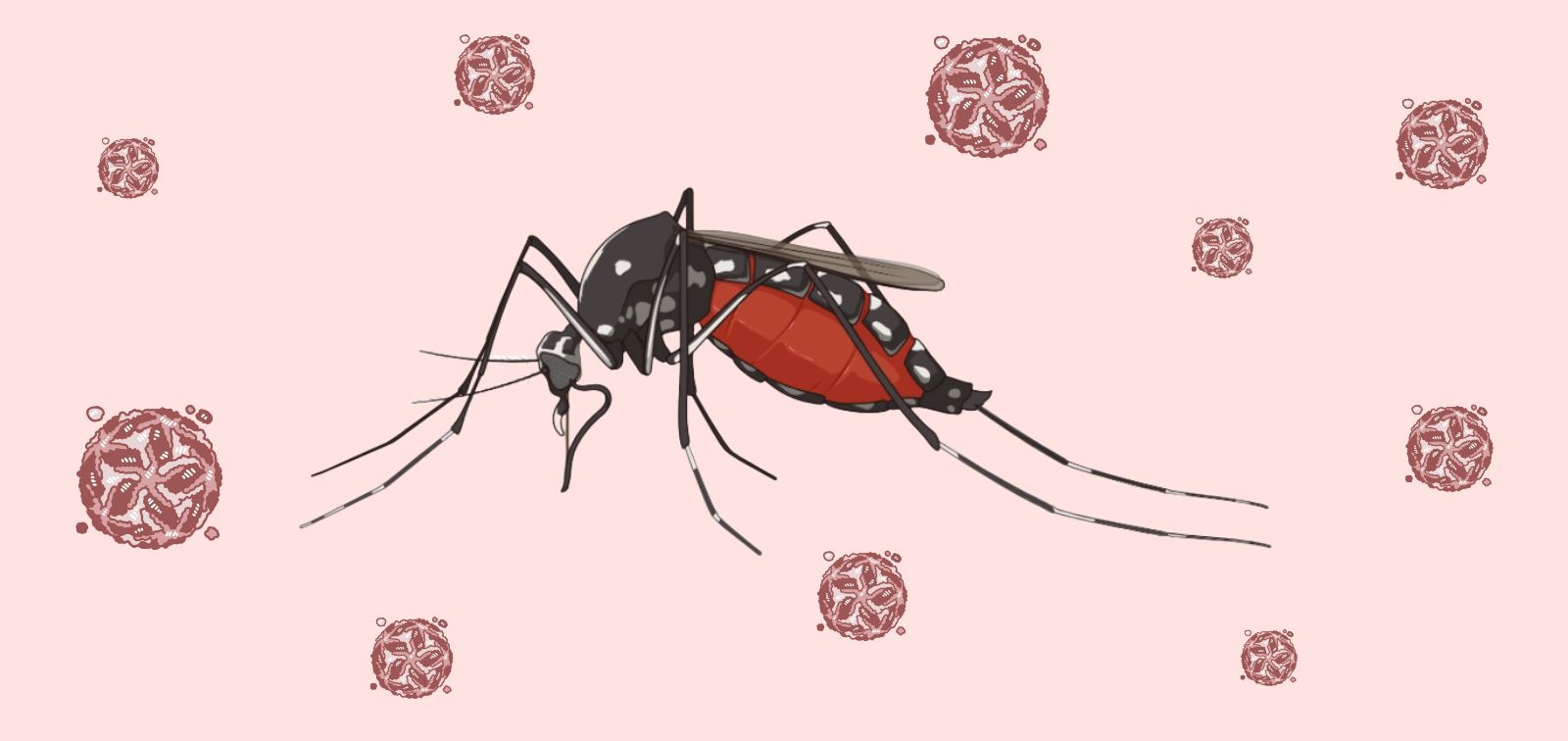
It is a small mosquito, measuring between 6 and 9 millimetres in length, and is easily recognised by its black body and the distinctive white bands running along its legs and body. It also has a characteristic white stripe running lengthwise along the head and thorax, which helps distinguish it from other mosquito species. As with most mosquitoes, only females bite. They use a proboscis (a long, slender mouthpart) to pierce the skin and feed on blood, as they require protein for egg development. Males, by contrast, feed exclusively on nectar and other plant sugars.
Where does the Asian tiger mosquito breed?
Aedes albopictus lays its eggs in small containers that hold stagnant water for several days, whether natural or artificial. Examples include plant saucers, pet water bowls, tree holes and buckets. Unlike other mosquito species that breed in ponds, marshes or wetlands, the Asian tiger mosquito prefers small water-filled containers. To complete their development, the larvae must remain in water for several days and therefore cannot develop in containers where the water evaporates before their life cycle is complete. The eggs are highly resistant and can remain attached to dry surfaces for months until they come into contact with water again and hatch. This ability contributes to the species’ rapid spread and establishment in new areas.
Distribution of Aedes albopictus
Today, Aedes albopictus is found across Africa, the Americas, Asia, Europe and Oceania. Its rapid spread, driven by globalisation, international trade and its remarkable ability to adapt, has increased public health interest in this species. Eggs and larvae can be transported unintentionally in goods that retain small amounts of water, such as used tyres or certain ornamental plants, contributing to the mosquito’s establishment in new territories.
What diseases can the Asian tiger mosquito transmit?
The Asian tiger mosquito can act as a vector, meaning it can transmit disease-causing microorganisms through its bite. To do so, the mosquito must first acquire the virus by feeding on an infected host. How transmission is maintained varies from one region to another. In areas where these diseases are endemic, viruses may circulate continuously between mosquitoes and the human population, whereas in non-endemic regions, local transmission usually begins with an imported case. The diseases it can transmit include dengue, chikungunya, Zika and yellow fever.
The mosquito’s ability to transmit disease also depends on the virus
The ability of the Asian tiger mosquito to transmit a virus depends not only on the mosquito itself but also on the characteristics of the virus. Although Aedes albopictus routinely transmits several viruses without them undergoing changes, genetic mutations can sometimes arise that increase a virus’s ability to replicate and be transmitted by the mosquito.
A well-known example occurred during the chikungunya outbreak in the Indian Ocean islands between 2005 and 2006, when a viral mutation enhanced transmission by Aedes albopictus, contributing to the rapid spread of the disease.
When does Aedes albopictus bite?
The Asian tiger mosquito is a mainly daytime-biting species, with peak activity in the early morning and, especially, in the late afternoon before sunset. Its period of activity varies depending on the climate. In tropical and subtropical regions, it may remain active throughout much of the year, whereas in temperate regions its activity is generally concentrated during the warmer months. Temperature directly influences its development. The warmer the conditions (provided there is sufficient water for breeding), the more quickly it completes its life cycle, which can take as little as six days under favourable conditions. In regions with cold winters, adults disappear, but the eggs can remain dormant and survive low temperatures until conditions become favourable again. Climate change may promote the spread of the Asian tiger mosquito into new areas and extend its period of activity. However, extreme heatwaves and prolonged droughts can also temporarily reduce mosquito populations by limiting the availability of water needed for larval development.
The bite of the Asian tiger mosquito
Unlike many other mosquito species, the Asian tiger mosquito often interrupts feeding if disturbed and resumes shortly afterwards. As a result, the same female may bite several times during a single search for a blood meal. The bite usually causes redness, itching and local swelling. In some people, the reaction may be more severe and can even trigger an allergic response. Removing small containers where water can accumulate is the most effective way to reduce Asian tiger mosquito populations and prevent bites.
READ MORE
COLLAPSE
- Mosquitoes: World's Deadliest Animal(ISGlobal, 2024)
- ISGlobal and ASPCAT Present Arbocat, the First Platform in Europe Predicting the Risk of Arboviral Outbreaks(ISGlobal, 2019)
- Climate Services Can Help Predict Dengue Incidence Several Months in Advance(ISGlobal, 2017)
- Be Prepared: The Most Dangerous Animals on Our Planet Are Here to Stay(ISGlobal, 2016)
MULTIMEDIA MATERIAL