
Ivermectin
What is ivermectin?
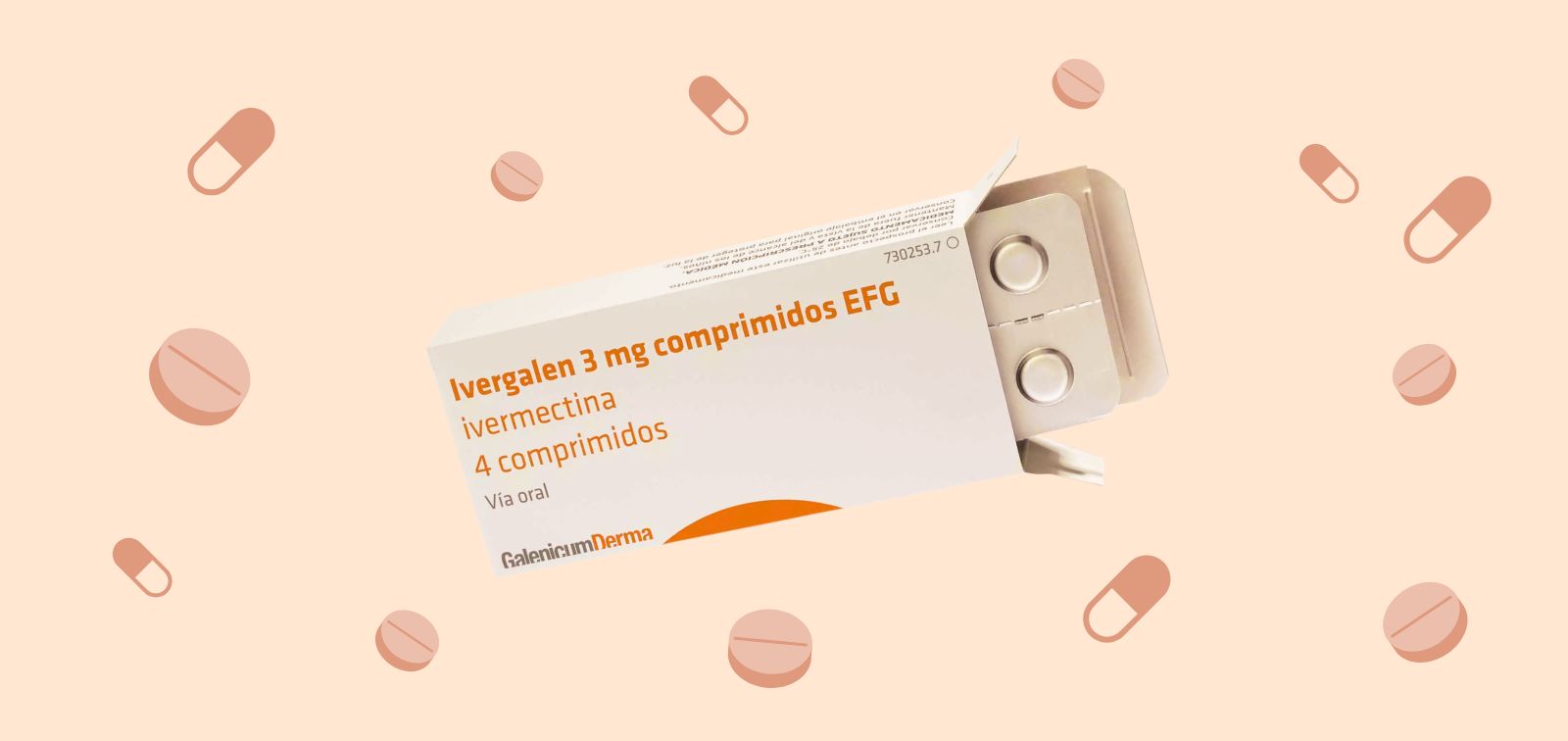
Ivermectin is a broad-spectrum antiparasitic medicine, meaning it is a drug capable of controlling a wide range of parasites. It belongs to the avermectin class and has been used since the 1980s for the treatment and control of a variety of parasitic diseases affecting both humans and animals.
It is included in the World Health Organization (WHO) Model List of Essential Medicines because of its effectiveness, safety and importance in the treatment of certain neglected tropical diseases.
Uses of ivermectin in global health
Ivermectin is indicated for the treatment of several parasitic infections, including onchocerciasis, or “river blindness”, lymphatic filariasis, strongyloidiasis (a soil-transmitted helminth infection) and scabies, particularly when topical treatments are insufficient or as part of population-based control programmes.
From a global health perspective, ivermectin has had a particularly significant impact on international programmes to control neglected tropical diseases, where its widespread distribution has helped to reduce transmission and disease-related complications associated with conditions such as onchocerciasis. In recent years, its potential role as a complementary tool for reducing malaria transmission through the control of mosquito vectors has also been investigated, although these applications remain under research and evaluation.
Ivermectin during the COVID-19 pandemic
During the COVID-19 pandemic, ivermectin attracted considerable scientific and media attention as a potential antiviral treatment. However, after evaluating the available evidence, the World Health Organization concluded that there was insufficient evidence to demonstrate a clinical benefit for the treatment of COVID-19 and recommended that the use of ivermectin for this purpose should be restricted to clinical trials.
Mechanism of action of ivermectin
Ivermectin acts primarily by binding to glutamate-gated chloride channels found in the nerve and muscle cells of many parasites. These channels, which are absent in mammals, play an essential role in neurotransmission and neuromuscular function. Binding of ivermectin increases the permeability of the cell membrane to chloride ions, allowing more chloride ions to pass through the channel. This causes hyperpolarisation of the cell membrane and prevents the normal transmission of nerve impulses. As a result, the parasite becomes paralysed, impairing its movement, feeding and survival.
The high selectivity of ivermectin is due to the absence of glutamate-gated chloride channels in the nerve and muscle cells of mammals. In addition, under normal conditions the drug crosses the blood–brain barrier only to a very limited extent, restricting its access to the central nervous system and contributing to its favourable safety profile when administered at the recommended therapeutic doses.
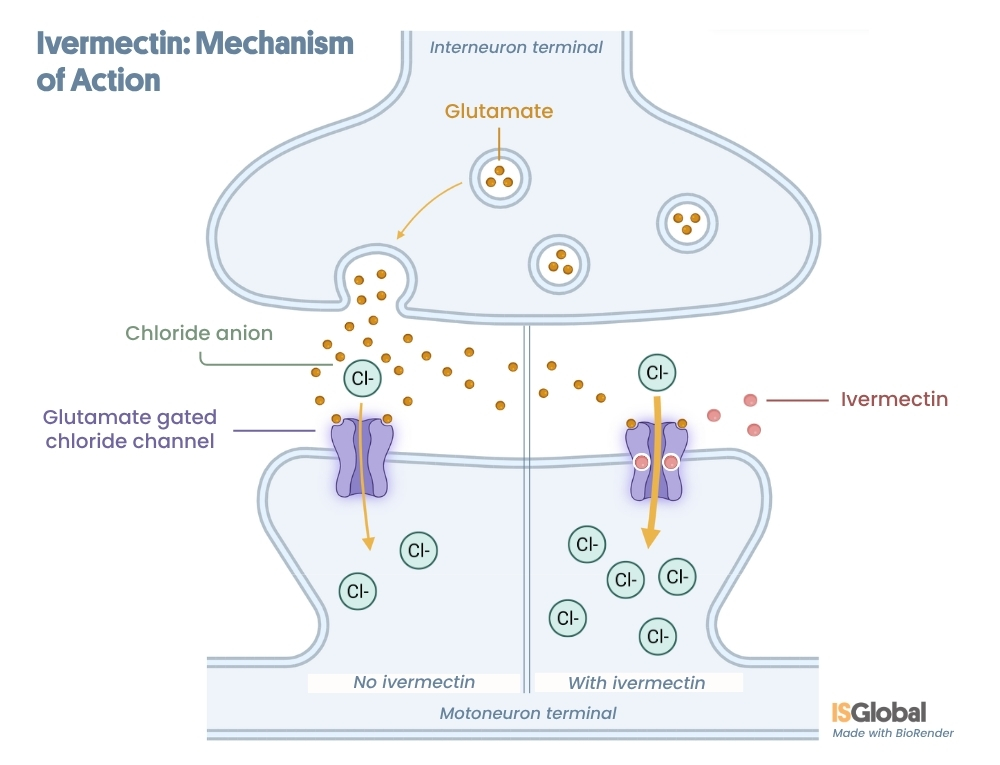
Mechanism of action of ivermectin. At the synapse between a parasite interneurone (which connects sensory neurones to motor neurones) and a motor neurone, the left-hand side shows the normal glutamate-activated flow of chloride ions. On the right, ivermectin binds to the chloride channel, keeping it open for a prolonged period. This markedly increases the flow of chloride ions and hyperpolarises the membrane of the motor neurone, making its membrane potential more negative and thereby blocking the transmission of nerve impulses, ultimately causing paralysis of the parasite.
When is ivermectin not recommended?
Although ivermectin has a favourable safety profile when used in accordance with approved indications and under medical supervision, it may cause adverse effects such as nausea, dizziness, diarrhoea or skin rashes.
In certain clinical situations, such as during pregnancy or in children weighing less than 15 kg, its safety has not been established. Ivermectin should only be administered in accordance with clinical guidance and the recommendations of the relevant health authorities.
READ MORE
COLLAPSE
- New Research Supports Ivermectin as an Effective Strategy to Control Malaria Transmission(ISGlobal, 2025)
- A Roadmap for Adding Ivermectin to the Malaria Toolbox(ISGlobal, 2020)
- New Study to Assess the Efficacy of Ivermectin Against COVID-19(ISGlobal, 2020)
- Ivermectin: From Soil to Worms, and Beyond(ISGlobal, 2019)
- Is Ivermectin Safe during Pregnancy?(ISGlobal, 2019)
MULTIMEDIA MATERIAL