
Green Spaces
What are green spaces?
Green spaces or green areas are open spaces partially or completely covered by vegetation. They include urban parks, forests, gardens and trees. When they are present in residential neighbourhoods, near workplaces or along travel routes between these and other destinations, these environments provide daily contact with nature.
At present, more than half of the world’s population lives in urban areas, and in Spain this figure represents around 80% of the population. Urban areas often provide predominantly built environments, where exposure to nature is limited. Green spaces are beneficial both for the environment and for our health.
Environmental benefits of green spaces
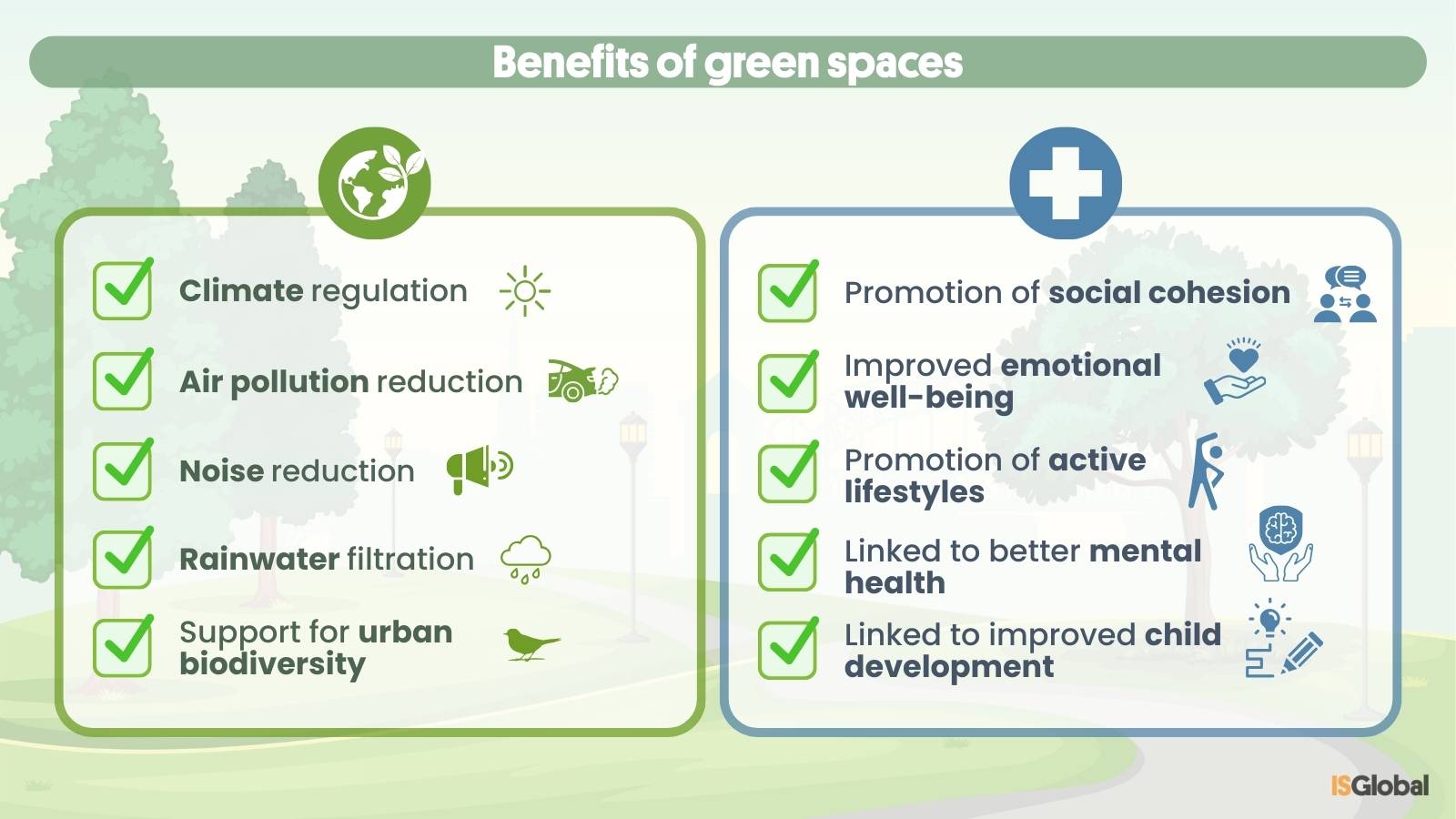
Green spaces contribute to climate regulation, as they help mitigate the ‘urban heat island’ effect by reducing local temperatures through shade and evapotranspiration. They are also useful for microclimate regulation, especially in densely built areas, improving thermal comfort.
Trees and urban vegetation also improve air quality in cities, although their effectiveness depends on the type of plants, their location and the ventilation of the urban environment. They help reduce air pollutants such as nitrogen dioxide (NO₂) and particulate matter (PM10 and PM2.5), and they sequester carbon, meaning they can capture carbon dioxide (CO₂) and store it in biomass and soils. However, the net benefit is greater when vegetation is combined with emission-reduction measures, such as decreasing traffic flow, since trees alone do not replace pollution-control policies.
Urban vegetation functions as green-blue infrastructure, improving water infiltration into the soil and acting as a natural filter: rainwater is purified as it passes through the soil and through the activity of microorganisms present in it. In addition, it supports urban biodiversity by providing habitat for birds, insects and other species, helping cities remain more resilient to droughts, heatwaves and pests. Vegetation also helps reduce environmental noise, acting as a natural acoustic barrier that absorbs and disperses sound.
Health benefits of green spaces
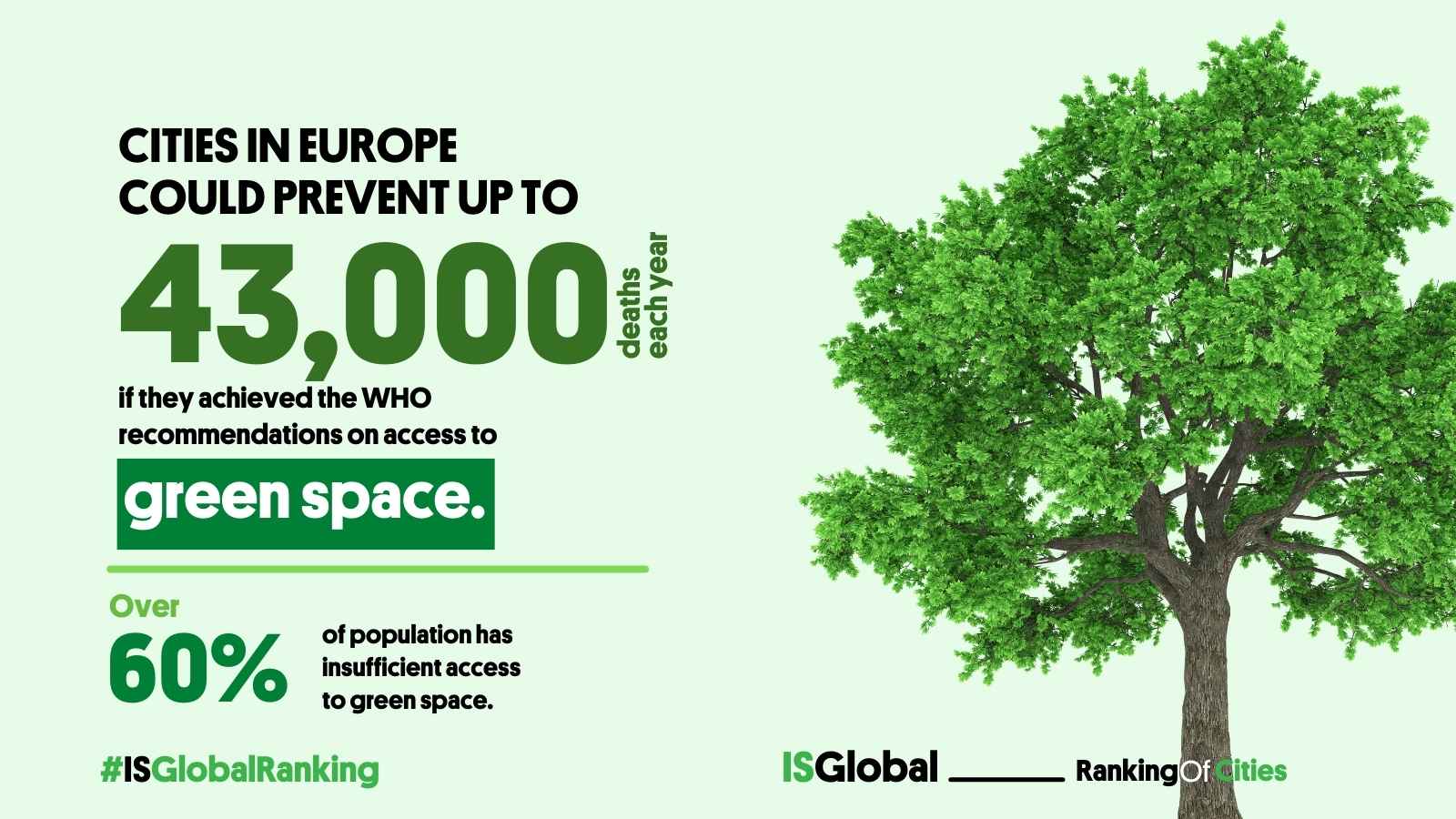
Green spaces in cities can help prevent premature deaths. According to a study by ISGlobal, increasing urban tree cover to 30% could prevent approximately one third of premature deaths attributable to urban heat islands in summer by reducing ambient temperature. In Barcelona, improving the distribution of green spaces could prevent 178 premature deaths each year.
As safe and pleasant places to gather, green spaces promote social cohesion and emotional wellbeing. Nature can even be “prescribed”: health or community professionals may recommend visiting parks and taking part in guided activities, facilitating the creation of new social connections, mutual support and a sense of belonging. In this way, green spaces become an accessible health resource, available outside the medical consultation, complementing healthcare and promoting wellbeing in everyday life.
They encourage an active lifestyle, especially in children and older adults, as well as promoting physical activity. These spaces allow people to walk, run, cycle and play outdoors, helping to reduce the risk of chronic diseases, including cardiovascular disease, obesity, type 2 diabetes and hypertension. There is also scientific evidence that maternal exposure to green spaces supports healthy fetal growth, is associated with a lower risk of breast cancer, and may even help alleviate premenstrual syndrome symptoms.
Living in greener areas is associated with better mental health and lower medication use, can reduce stress, restore the ability to pay attention and concentrate, and improve cognitive function. In addition, the risk of ischaemic stroke, the most common type of stroke, is reduced by 16% among people who have green spaces within 300 metres of their home. The amount of vegetation around the home and proximity to natural spaces are also associated with slower physical decline.
Exposure to green spaces appears to be especially beneficial for the child population. Green spaces are linked to better child development by reducing the effects of air pollution and noise. Regarding lung function benefits, these spaces are thought to promote respiratory health by reducing air pollution, and may also contribute to immune system development by exposing children to beneficial microbiota. Oxidative stress levels are also lower in children who live near green spaces. In addition, they have a 50% lower risk of developing ADHD than those living in areas with higher air pollution.
By providing places for recreation, rest and connection with others, green spaces facilitate social interaction, reducing isolation and strengthening the sense of community.
The WHO recommends equitable access to green spaces as a preventive public health measure.
READ MORE
COLLAPSE
- Caring Cities: Why We Need More Green Spaces, Innovation, and Consensus(ISGlobal, 2025)
- Improving the Distribution of Green Spaces in Barcelona Could Prevent 178 Premature Deaths Each Year(ISGlobal, 2025)
- Mark Nieuwenhuijsen: "It’s better to have a small green space close to home than a big park further away"(ISGlobal, 2022)
- Living in Greener Areas Is Associated With Better Mental Health and Less Medication Use(ISGlobal, 2022)
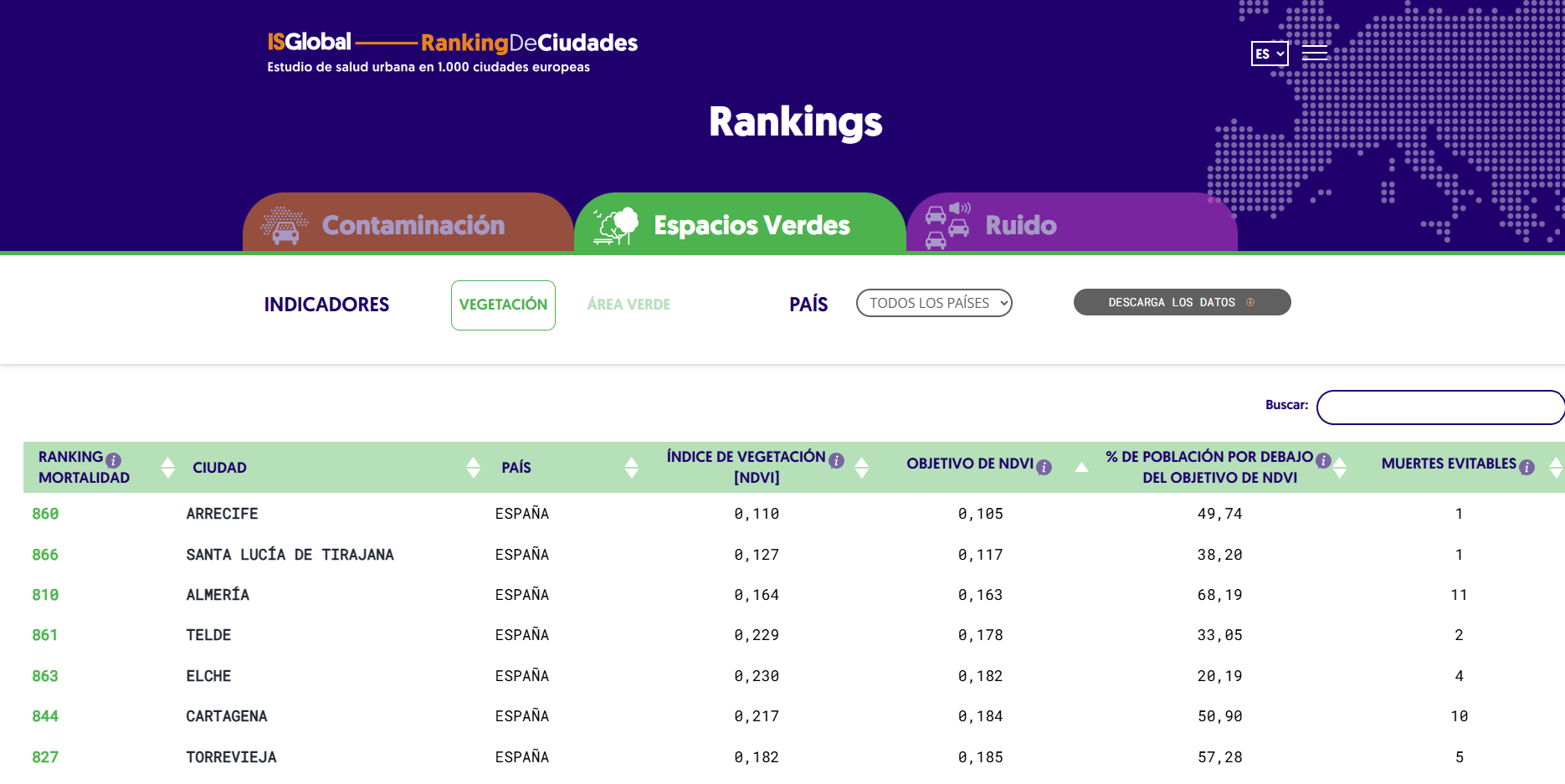
- ISGlobal Publishes Ranking of European Cities With Highest Mortality Due to Lack of Green Space(ISGlobal, 2021)
- Green Spaces Associated with Better Childhood Development Due to Reductions in the Adverse Effects of Air Pollution and Noise(ISGlobal, 2021)
- A Greener Paris(ISGlobal, 2021)
- Green Spaces: A Resource for Mental Health(ISGlobal, 2020)
MULTIMEDIA MATERIAL