
Bioaerosols
What are bioaerosols?
Bioaerosols are airborne particles of biological origin. They include bacteria, fungi, viruses, pollen, and small biological fragments or products, such as allergens and microbial cell components. They may contain living microorganisms, inactive microorganisms, or simply cell-free biological material.
Where do bioaerosols come from?
Bioaerosols can originate from natural sources or be associated with human activities.
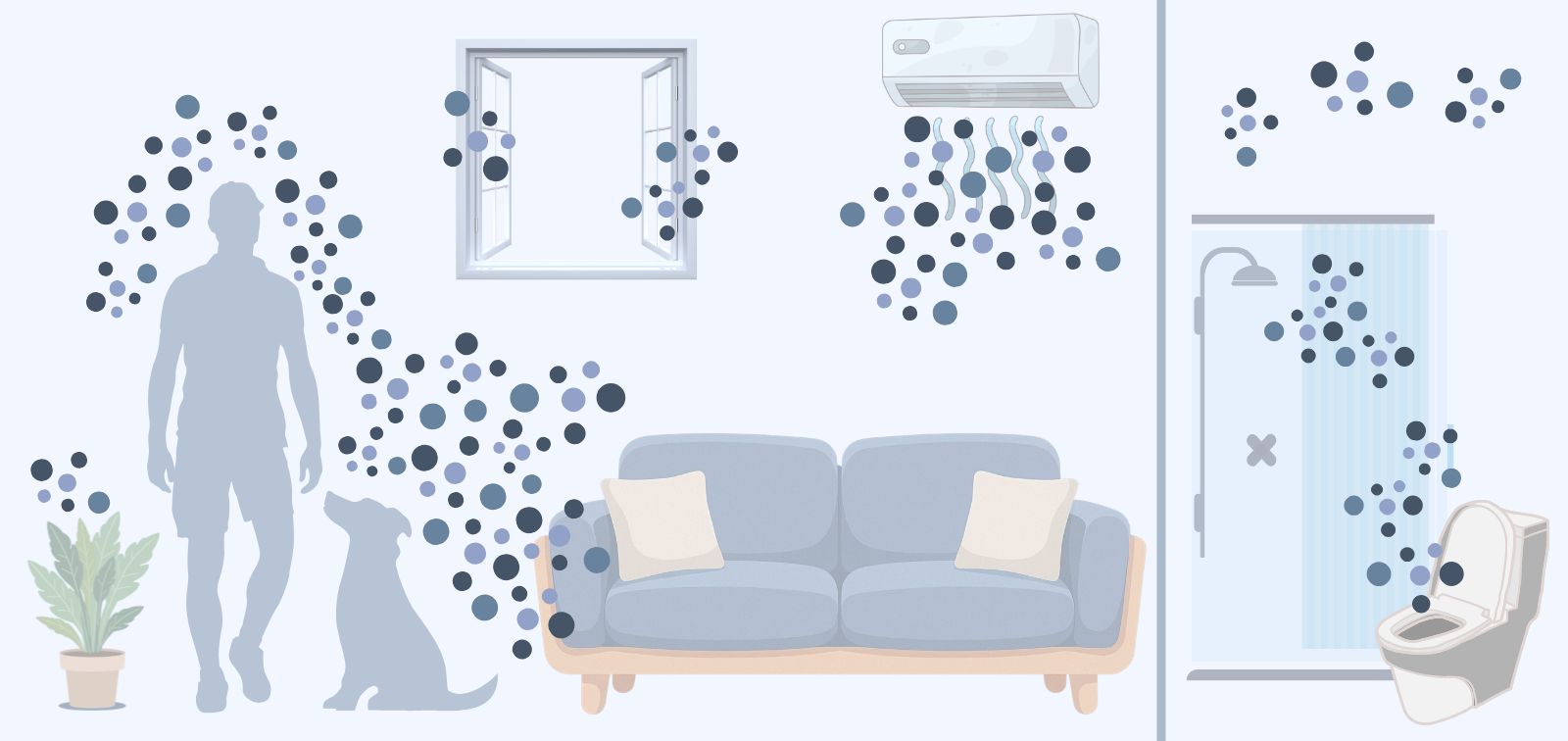
In natural environments, they can become airborne through the release of pollen and spores, the wind-driven resuspension of particles from soil and vegetation, the impact of raindrops, or the formation of sea spray aerosols. Human activities such as agriculture, composting, wastewater treatment, and certain industrial processes can also generate or disperse bioaerosols. Indoors, people, animals, ventilation systems, and damp building materials can act as sources or facilitate their dispersal.
Do bioaerosols pose a health risk?
The presence of bioaerosols does not necessarily pose a health risk. We are constantly exposed to airborne microorganisms, and many of them are harmless. Moreover, exposure to an appropriate diversity of microbes may contribute to the development and regulation of the immune system. This concept has led to emerging ideas such as “probiotic homes”, which aim to promote a more diverse and healthier indoor microbiota.
However, some components of bioaerosols can have adverse effects:
- Allergic effects, associated with pollen, fungal allergens, and mite fragments or faeces.
- Inflammatory or toxic effects, caused by endotoxins, β-glucans, and certain microbial metabolites.
- Infections, when viable infectious microorganisms are present, an appropriate route of exposure exists, and the infectious dose is sufficient.
Symptoms and health effects associated with bioaerosol exposure
Exposure may cause symptoms such as coughing, itchy eyes, or allergic rhinitis. The level of risk depends on the concentration and size of the particles, the duration of exposure, the viability or infectivity of the agent, and the susceptibility of each individual. Because bioaerosols are highly diverse and measurement methods vary considerably, there are no universal exposure limit values applicable to all bioaerosols.
Exposure may be higher in certain occupational settings, including agriculture, composting, waste management, wastewater treatment, and landfill sites. In these sectors, handling organic materials can release large quantities of bioaerosols, increasing the risk of asthma, bronchitis, and other respiratory conditions. Direct contact without appropriate protective measures may also increase the risk of infection.
How do bioaerosols affect air quality?
Bioaerosols are part of the particulate matter present in both indoor and outdoor air. Their concentration and composition may vary depending on existing sources, human activities, and meteorological conditions such as temperature, humidity, wind, and rainfall.
They may also interact with chemical air pollutants. These interactions can alter their persistence, allergenic potential, or biological effects. For example, ozone can react with certain organic compounds associated with fungal spores, promoting the formation of new particles known as secondary organic aerosols.
For this reason, a comprehensive assessment of air quality should not focus solely on chemical pollutants, but should also take into account its biological component.
How are bioaerosols detected?
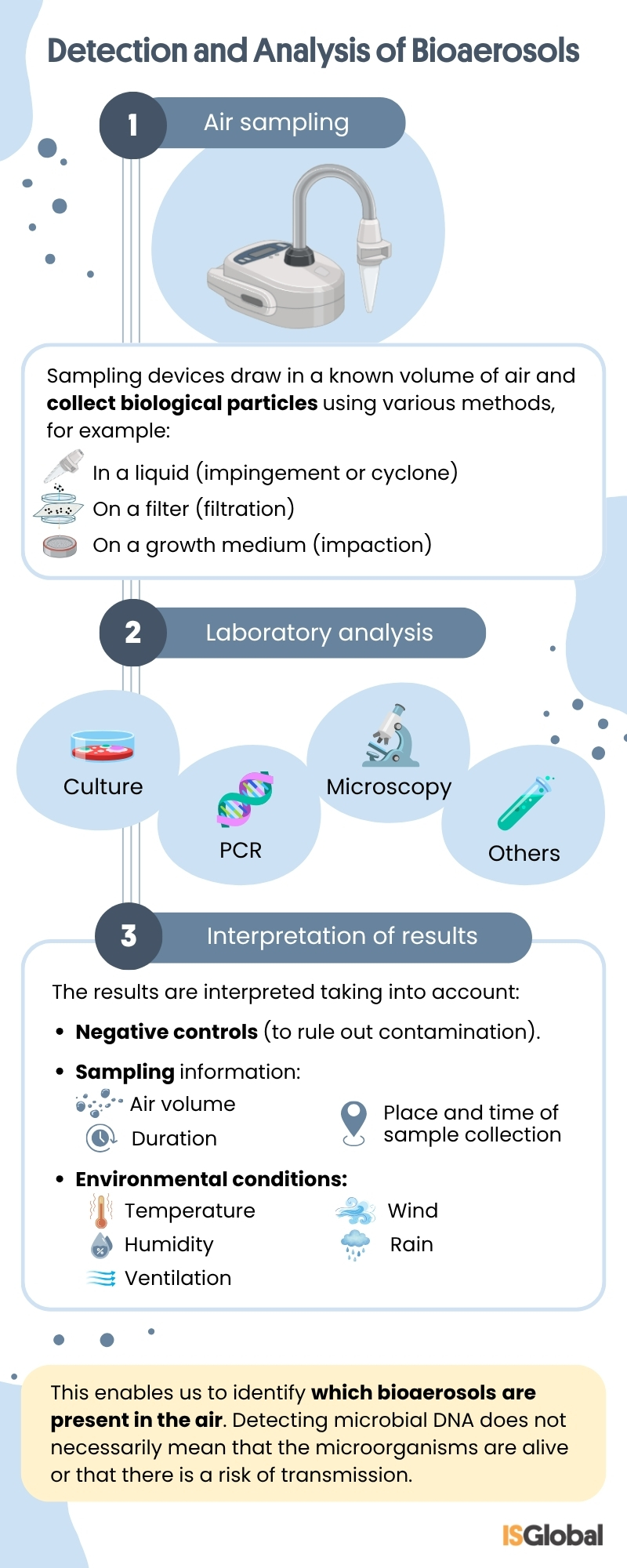
Airborne bioaerosols are generally invisible to the naked eye. Studying them requires collecting air samples and analysing them using specialised techniques. No single method can capture and characterise all their components, so the sampling and analytical strategy should be selected according to the objectives of the study.
1. Air sampling
Air samplers draw in a defined volume of air and collect biological particles onto filters, liquids, or culture media. Some systems use impaction, in which air is directed onto a surface where particles are retained. Sampling duration, the volume of air collected, and the location and timing of sampling can all have a substantial influence on the results.
2. Sample analysis
Once collected, samples can be analysed using different techniques.
- Culture: detects living microorganisms capable of growing under laboratory conditions.
- PCR and sequencing: identify microorganisms based on their DNA or RNA.
- Microscopy and the analysis of allergens, toxins, and other biological components.
Each method provides different types of information and has its own limitations.
3. Interpretation of results
Air generally contains relatively small amounts of microbial material. It is therefore essential to include negative controls throughout sampling, transport, extraction, and analysis to distinguish genuine environmental signals from contamination introduced during the process.
It is also important to record environmental conditions and activities during sampling, including ventilation, occupancy, temperature, humidity, wind, and rainfall.
The detection of microbial DNA or antimicrobial resistance genes does not, by itself, demonstrate that microorganisms are alive, that resistance is functional, or that transmission is occurring. Robust interpretation requires combining analytical findings with negative controls, environmental information, and, whenever possible, complementary analytical methods.
The concentration and composition of bioaerosols can vary considerably over time and between locations. Odours or visible mould may indicate a moisture problem or microbial growth, but on their own they cannot determine the amount of bioaerosols present in the air. Where visible mould is present, the priority is to identify and eliminate the source of moisture; air sampling should only be carried out when it addresses a specific question.
READ MORE
COLLAPSE
MULTIMEDIA MATERIAL