

Blue light
What is blue light?
Blue light is a natural part of visible light and is present in both sunlight and many sources of artificial lighting, including phone, computer and tablet screens. In recent years, it has attracted considerable interest because of its potential effects on sleep, vision and health.
Blue light is non-ionising radiation, meaning that it does not directly alter the genetic structure of cells, unlike X-rays, for example. It has a wavelength of approximately 400 to 500 nanometres (nm), placing it between violet and green light within the visible spectrum.
Light consists of small units of energy called photons: the shorter the wavelength, the greater the energy of each photon. Blue-light photons therefore have more energy than green, yellow or red-light photons, although much less than those of ultraviolet (UV) radiation.
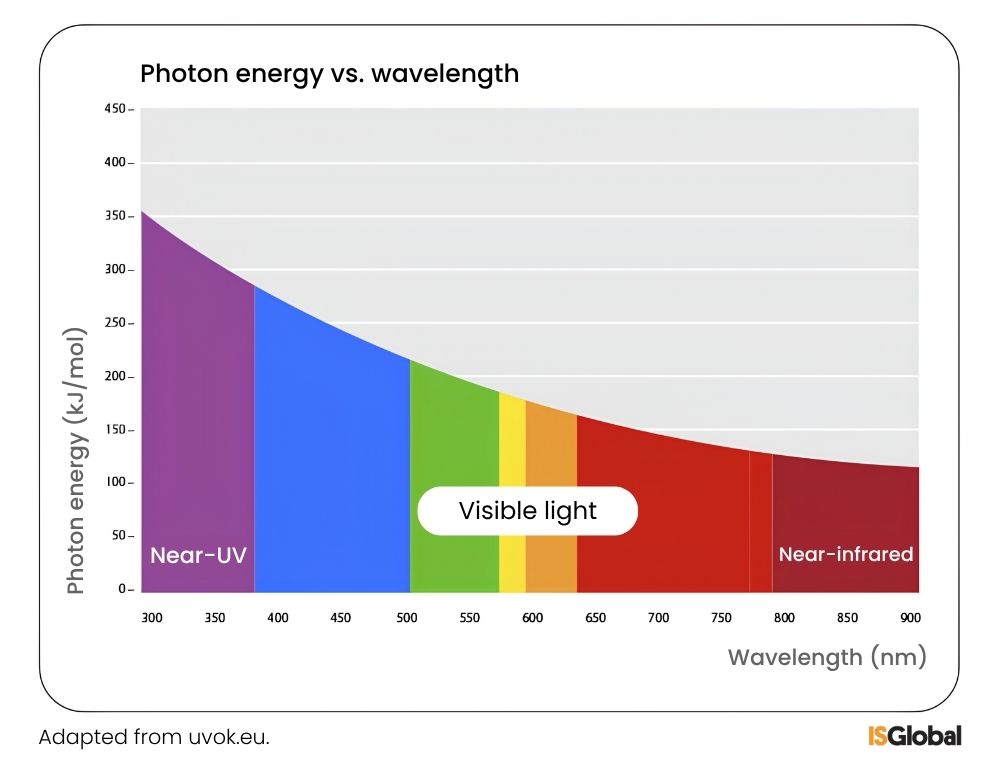
Relationship between photon energy and wavelength in the electromagnetic spectrum. The graph shows how photon energy (measured in kJ/mol) decreases as wavelength (in nanometres) increases, from near-ultraviolet (UV) radiation, through the visible-light spectrum (approximately 380–750 nm), to near-infrared radiation.
Sources of blue light
Although the main source of daily exposure to blue light is the Sun, it is also present in various artificial sources used in everyday life. Over recent decades, exposure to artificial light has increased, driven both by the expansion of outdoor lighting and by the use of electronic devices.
- LED lighting: increasingly used in homes, offices, hospitals, shops and street lighting. Replacing traditional sources, such as sodium lamps, with white LEDs has changed the nighttime lighting environment in many cities. Some white LEDs contain a higher proportion of short wavelengths, including blue light, than previously used lighting technologies.
- Electronic screens: mobile phones, tablets, computers and televisions emit blue light to produce images, although at a much lower intensity than sunlight.
- Fluorescent lamps: these also emit a proportion of blue light within their emission spectrum, although its distribution differs from that of LEDs.
Exposure to artificial light is not limited to screens: it also comes from lighting in homes, buildings, shops and public spaces. In addition, in many societies, people are exposed to less natural light during the day and more artificial light at night. The health relevance of this exposure depends not only on the spectrum or “colour” of the light, but also on its intensity, duration and timing.
Functions of blue light in the body
Light is the main environmental cue that synchronises our circadian rhythm, the biological clock that regulates sleep–wake cycles and numerous bodily processes over a period of approximately 24 hours. Exposure to sufficient light during the day, particularly in the morning, helps keep this rhythm properly synchronised.
When light reaches the retina, it activates not only the cells responsible for vision but also specialised cells known as intrinsically photosensitive retinal ganglion cells (ipRGCs). These cells contain melanopsin, a light-sensitive pigment, and are particularly sensitive to short wavelengths corresponding to the blue region of the spectrum. Their role is to detect the presence of light and transmit this information to the brain, where it helps regulate the circadian clock.
During the day, this signal helps maintain wakefulness and alertness. At night, however, exposure to light, especially light containing a high proportion of short wavelengths, can suppress melatonin production. Melatonin is a hormone that promotes sleep, and changes in its production can affect when the body prepares for sleep. Thus, exposure to light at night can delay the circadian clock and promote wakefulness.
The circadian system also influences numerous bodily processes, including some hormonal, metabolic and cardiovascular processes. Maintaining appropriate cycles of light and darkness is therefore important for its functioning.
Effects of blue light on health
Sleep and circadian rhythm
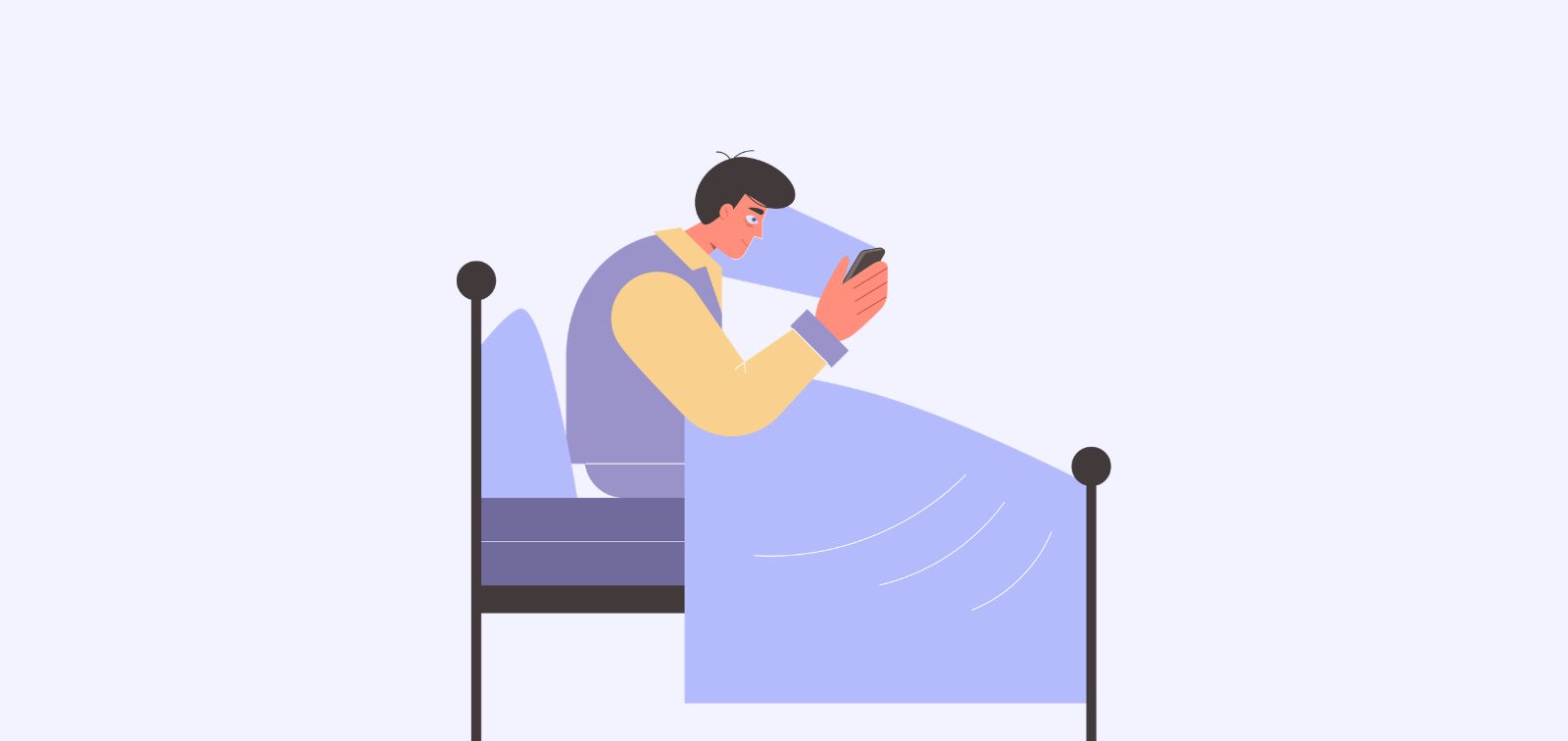
This is the effect best established by scientific evidence. Exposure to bright light at night, particularly in the hours before bedtime, can make it harder to fall asleep and affect sleep quality. This effect is not exclusive to blue light or screens; it can occur with different sources of light.
The magnitude of the effect depends on factors such as light intensity, duration of exposure, time of day and distance from the light source.
Eye health
The claim that screens damage the retina because they emit blue light is a myth. Current evidence indicates that there is no evidence that normal use of screens or LED lighting causes retinal damage in healthy people.
Phototoxic damage from blue light can occur with extremely intense sources, such as looking directly at the Sun or exposure to certain industrial and medical devices. However, these conditions are not comparable to everyday use of screens or household lamps.
Furthermore, although some people experience eye strain after spending hours in front of a screen, evidence suggests that this is mainly due to the effort of maintaining focus, a reduced blinking rate and dry eyes associated with prolonged use, rather than blue light itself.
Other possible health effects
Beyond its effects on sleep, there is growing interest in the possible long-term consequences of exposure to artificial light at night. Some epidemiological studies have observed associations between greater exposure at night and an increased risk of certain types of cancer, particularly breast cancer, as well as cardiovascular disease, obesity, diabetes and other metabolic disorders.
However, for many of these effects, the evidence remains limited and does not establish that blue light or artificial light at night is, in itself, the cause. These potential effects also depend on exposure characteristics such as intensity, duration and timing, not solely on the amount of blue light.
How to manage light exposure at night
Public health recommendations focus on reducing exposure to bright light at night, particularly in the hours before bedtime, while ensuring adequate exposure to natural light during the day:
- Reduce screen brightness in the hours before bedtime.
- Limit the use of electronic devices before going to bed if they interfere with sleep.
- Use warm, dim lighting at night.
- Ensure sufficient exposure to natural light during the day to help keep the circadian rhythm synchronised.
These measures do not mean avoiding blue light during the day, as exposure to natural light during the day is important for regulating our biological clock.
READ MORE
COLLAPSE
Related words
No se ha encontrado ninguna palabra.