

Epigenetics
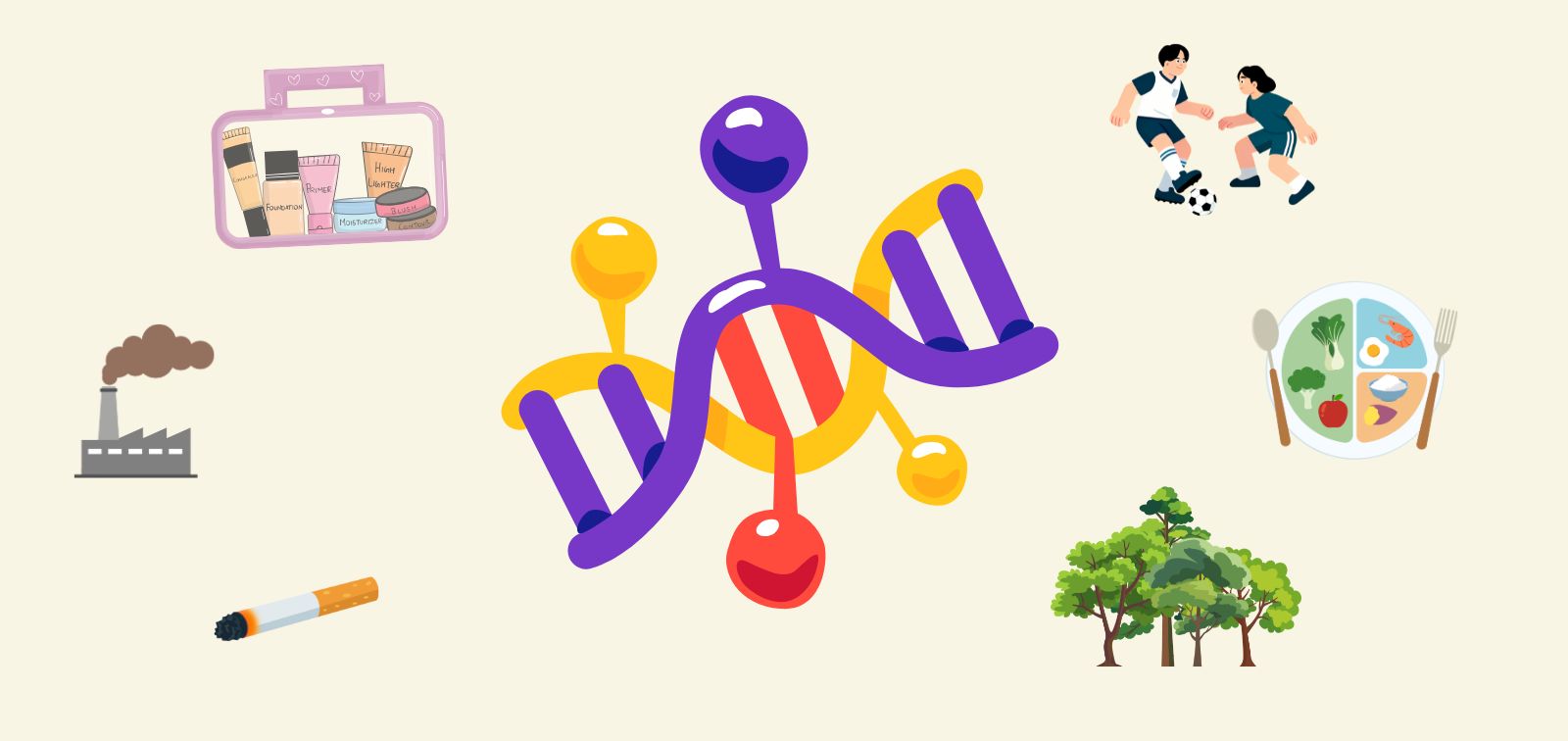
What is epigenetics?
While genetics focuses on the DNA sequence (the genes themselves), epigenetics examines the mechanisms that control how those genes are switched on or off without altering the sequence. In other words, it looks at chemical markers that sit “on top of” DNA (the prefix epi- means “above”) and regulate how genes are expressed.
All these modifications together are known as the epigenome. They act like switches, determining whether a gene is active or inactive in a specific cell type at a given time.
How the environment shapes the epigenome
The epigenome is partly inherited but also dynamic, responding to environmental influences throughout life. Key factors include:
- Lifestyle: physical activity, stress, sleep, and exposure to tobacco and alcohol can leave molecular marks on DNA.
- Diet: nutrients such as folic acid and vitamin B12, as well as overall dietary patterns (e.g. the Mediterranean diet), influence processes like DNA methylation.
- Exposure to pollutants or endocrine disruptors: substances such as heavy metals or certain chemicals may alter epigenetic patterns.
Why can identical twins have different risks of developing disease?
Although monozygotic twins share almost identical DNA, they do not always show the same susceptibility to disease. This is partly due to differences in their epigenome.
Over time, each individual is exposed to different environments and experiences (diet, physical activity, stress, social context). These differences lead to specific epigenetic modifications that influence gene expression. As a result, two identical genomes can function differently.
What are epigenetic changes for?
Genes can be thought of as books in a library, with the cell as the library itself. Epigenetics acts as the system that decides which books are opened and read at any given time. Although all cells contain the same collection of genes, each cell uses only those required for its specific role.
Epigenetic changes therefore regulate which genes are expressed in each cell and at each moment. Since genes carry the instructions for protein production, switching them on or off determines which proteins are made and, ultimately, how a cell behaves and functions.
A key example is cell differentiation: all cells share the same DNA, yet they express different genes. This is why a liver cell does not produce proteins specific to bone tissue.
These epigenetic marks can be maintained during cell division and, in some cases, passed on to the next generation.
Epigenetics also plays a significant role in many health conditions, including cardiovascular diseases, cancer, and neurological processes such as memory, learning, and brain ageing.
Types of epigenetic changes
- DNA methylation. The addition of methyl groups to DNA, often associated with gene silencing.
- Histone modifications. DNA is wrapped around histone proteins; chemical changes to these proteins affect chromatin structure and gene accessibility.
- Non-coding RNA. RNA molecules that help regulate epigenetic mechanisms.
READ MORE
COLLAPSE
- Second-Hand Smoke Exposure During Childhood Leaves its Mark on Children's DNA(ISGlobal, 2025)
- Alcohol and Tobacco Use Lead to Major Epigenetic Changes(ISGlobal, 2023)
- Both Genetics and Environment Play a Role in DNA Methylation and Thereby in the Expression of Certain Genes(ISGlobal, 2022)
- A New study Provides Valuable Information on DNA Methylation and Gene Expression in Children(ISGlobal, 2022)
- Smoking During Pregnancy May Impact Fetal Growth through Changes in Placental Gene Expression(ISGlobal, 2021)
- Exposure to Tobacco Smoke in Early Life is Associated with Accelerated Biological Ageing(ISGlobal, 2021)
- Exclusive breastfeeding linked to long-term changes in blood markers(ISGlobal, 2026)
MULTIMEDIA MATERIAL