

Noma
What is noma?
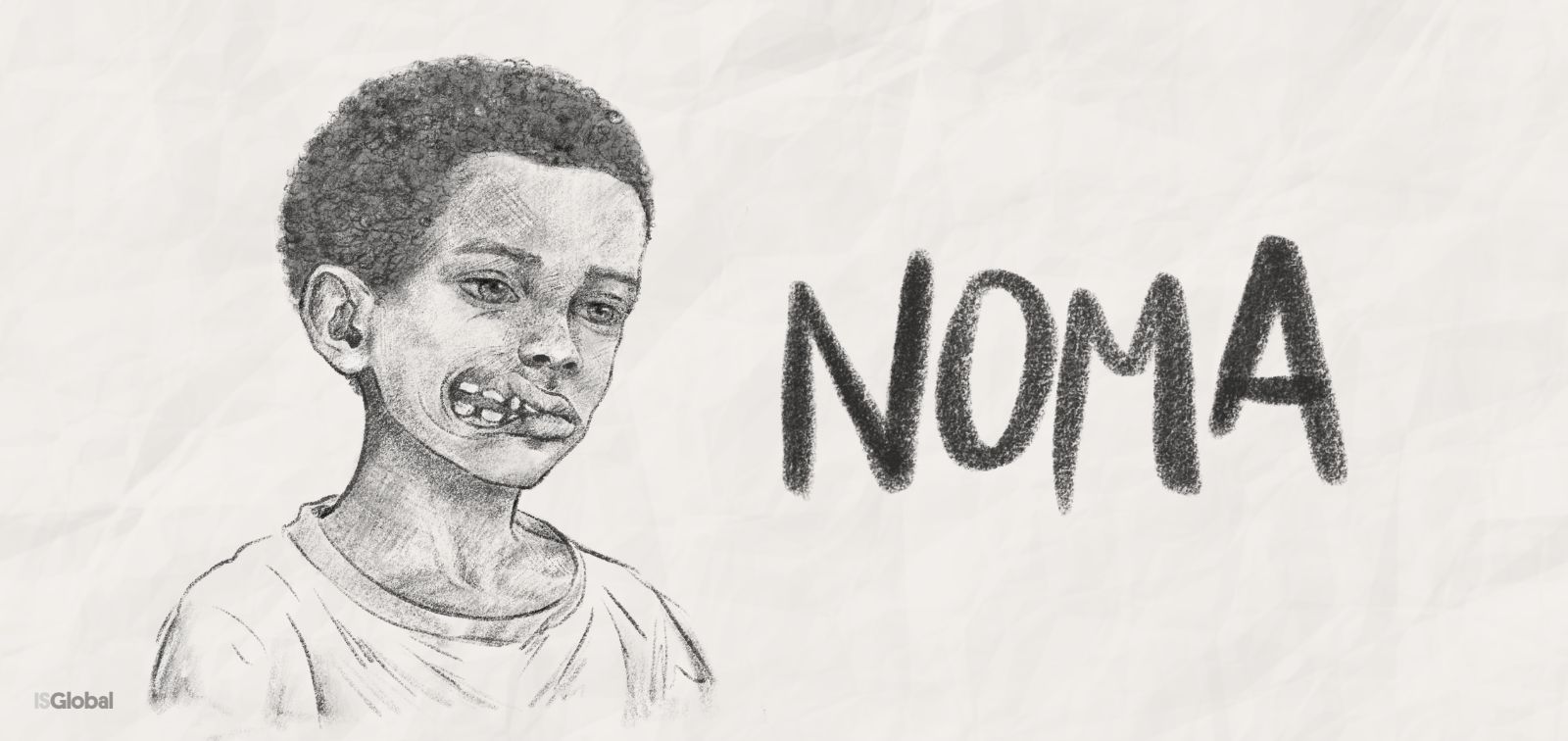
Noma, also known as cancrum oris, is a necrotising orofacial bacterial infection, meaning that it affects the mouth and face (orofacial) and causes the rapid death and destruction of tissues (necrotising). Since 2023, the WHO has classified it as a neglected tropical disease (NTD).
So far, no single causative agent of noma has been identified. For this reason, the disease is considered to begin as an opportunistic infection, that is, an infection caused by microorganisms that take advantage of a weakened state (such as malnutrition or immunosuppression) to cause disease. In this context, it has been suggested that noma arises as a consequence of dysbiosis, that is, an imbalance in the oral microbiome. The oral microbiome is the set of microorganisms that normally inhabit the mouth and that, under normal conditions, remain in balance. When that balance is disrupted, some bacteria may proliferate excessively and behave as pathogens, promoting the development of the disease.
However, a recent study suggests the possible existence of a single causal bacterium, a new species of the genus Treponema. To confirm this hypothesis, a larger-scale study is currently being conducted that includes patients from several countries and in which ISGlobal is participating. This research aims to clarify which agent or agents are responsible for the disease and to better understand how the immune system responds to the infection.
Noma is an infectious disease, but it is not contagious. It begins with necrotising gingivitis — ulcers in the gums — that progress within days to destruction of the soft and hard tissues of the face.
Which populations are affected by noma?
It mainly affects children living in poverty, with poor oral hygiene, malnutrition and who have recently had an infectious disease such as malaria or measles. To a lesser extent, it also occurs in adults with immunodeficiency due to infection with HIV or diseases such as leukaemia.
Noma is closely linked to the social determinants of health, that is, socioeconomic, nutritional and health conditions. A historical example of this relationship is its high prevalence in Europe until the nineteenth century. Improvements in living conditions led to the near elimination of noma on the continent, with the exception of the Second World War. During this period, dozens of cases were documented among children interned in the Auschwitz and Bergen-Belsen concentration camps, in a context of extreme malnutrition and lack of healthcare.
In recent decades, most cases have been reported on the African continent and, to a lesser extent, in Asia. According to the WHO, since the early 2000s more than 13,000 cases of noma have been described in scientific publications. However, this figure is estimated to represent only a fraction of the true burden of the disease.
Most patients are neither diagnosed nor treated and therefore are not counted. This underdiagnosis can be explained by several factors: the rapid clinical progression (in approximately 2 weeks), a mortality rate of up to 90% in the absence of treatment, the lack of awareness of noma among health professionals and the stigmatisation associated with people affected by the disease.
Diagnosis and treatment of noma
Currently, there is no specific test to diagnose noma, so healthcare personnel rely on clinical criteria according to the stage of the disease. Five stages are distinguished:
- The stage 1 comprises necrotising gingivitis, characterised by aggressive ulceration of the gums that causes intense pain and bad breath. This is followed by necrotising stomatitis, meaning that the gum ulceration spreads to the other mucosal tissues of the mouth.
- In stage 2, oedema or swelling of the cheek occurs. This inflammation is visible on the outside of the face, although the ulcerative lesion occurs inside the mouth.
- In stage 3, the swelling rapidly progresses to tissue death due to lack of blood supply. This process, known as necrosis, causes the affected tissue to separate from the healthy tissue, leaving an opening of variable size in the affected area.
- In stage 4, the disease no longer progresses and the affected tissue begins to heal.
- Finally, stage 5 constitutes the chronic phase, in which the patient lives with the sequelae of noma. At this stage, patients are referred to as “noma survivors”.

The first three stages of noma: necrotising gingivitis (stage 1), swelling of the cheek (stage 2) and tissue necrosis (stage 3). Illustrations: Victoria Cabedo
Treatment is based on the use of widely available antibiotics, together with improved oral hygiene through mouth rinses and a procedure known as debridement of necrotic tissue, which consists of carefully removing dead or severely damaged tissue caused by the infection in order to stop its progression and promote healing. This must be accompanied by improvements in nutritional status.
In the early stages (up to stage 2), treatment can reverse the disease without leaving sequelae. However, from stage 3 onwards, although treatment may save the patient’s life, the tissue damage is irreversible. This will result in facial disfigurement requiring reconstructive surgery, as well as significant psychosocial consequences. Therefore, early detection of noma is crucial to ensure treatment is effective and to minimise, as far as possible, the sequelae.
Sequelae of noma: what happens after the disease
The sequelae of noma are physical, functional and social. The severe facial disfigurement suffered by many noma survivors causes significant discomfort and difficulties speaking, chewing, eating or seeing. In addition, it leads to strong stigmatisation and social isolation.
Studying and raising awareness about noma is essential. Ensuring that healthcare professionals around the world recognise it and know how to diagnose and treat it will expand access to early treatment to prevent future cases and increase the number of reconstructive surgeries for those who have already had the disease. Furthermore, when communities in affected countries are informed about the disease — and this awareness is accompanied by appropriate psychological support for patients and survivors — it helps reduce stigmatisation and promotes social reintegration.
The integration of noma into existing health surveillance systems can facilitate the generation and systematisation of data, improve accessibility and strengthen the leadership of ministries of health through stronger intersectoral and multisectoral coordination.
READ MORE
COLLAPSE
- When Neglect Makes People Sick Too: Noma and Neglected Tropical Diseases(ISGlobal, 2026)
- Noma, the forgotten disease that remains invisible(ISGlobal, 2025)
MULTIMEDIA MATERIAL