

Poliomyelitis
What is Poliomyelitis?
Poliomyelitis (commonly known as polio or infantile paralysis, as it mainly affects children under 5) is a highly infectious disease caused by the poliovirus, which primarily targets the nervous system. Specifically, the virus affects the nerve cells that control muscle movement. In severe cases, it can lead to total paralysis within hours; one in every 200 infections causes irreversible paralysis, and 5–10% of these cases are fatal due to respiratory muscle failure.
In 1988, the World Health Assembly adopted a resolution to eradicate poliomyelitis globally, which led to the launch of the Global Polio Eradication Initiative (GPEI). Since then, the incidence of the disease has dropped by 99%, making it a strong candidate for eradication.
Transmission
Poliomyelitis is highly contagious. The poliovirus spreads mainly through the faecal-oral route, such as consuming food or water contaminated with faeces. It can also spread through respiratory droplets when coughing or sneezing. Even individuals with no symptoms can carry and shed the virus for weeks, making transmission easier.
Some groups are at higher risk of infection, including people with weakened immune systems, malnourished individuals, and pregnant women. However, the fetus is usually not affected, and maternal antibodies can provide some protection during the baby’s early months.
Preventing transmission involves proper hand hygiene and, most importantly, vaccination, which is essential for controlling and eliminating the disease.
Symptoms
Many cases of poliomyelitis are asymptomatic. When symptoms do appear, they can range from mild to severe.
The mildest form is called abortive poliomyelitis, and causes fever, vomiting and muscle aches.
A more serious form, known as non-paralytic poliomyelitis, may involve tingling sensations, muscle spasms or stiffness in the neck, but does not result in paralysis.
The most severe form is paralytic poliomyelitis, which is rare. It begins as “pre-paralytic poliomyelitis”, with symptoms similar to the non-paralytic type, but eventually leads to paralysis in one or more limbs. It may also impair respiratory muscles and cause difficulty swallowing.
Treatment
There is no cure for polio. Treatment focuses on improving comfort, speeding up recovery and preventing complications. Supportive care may include pain relief, physiotherapy and portable ventilators.
Prevention and control
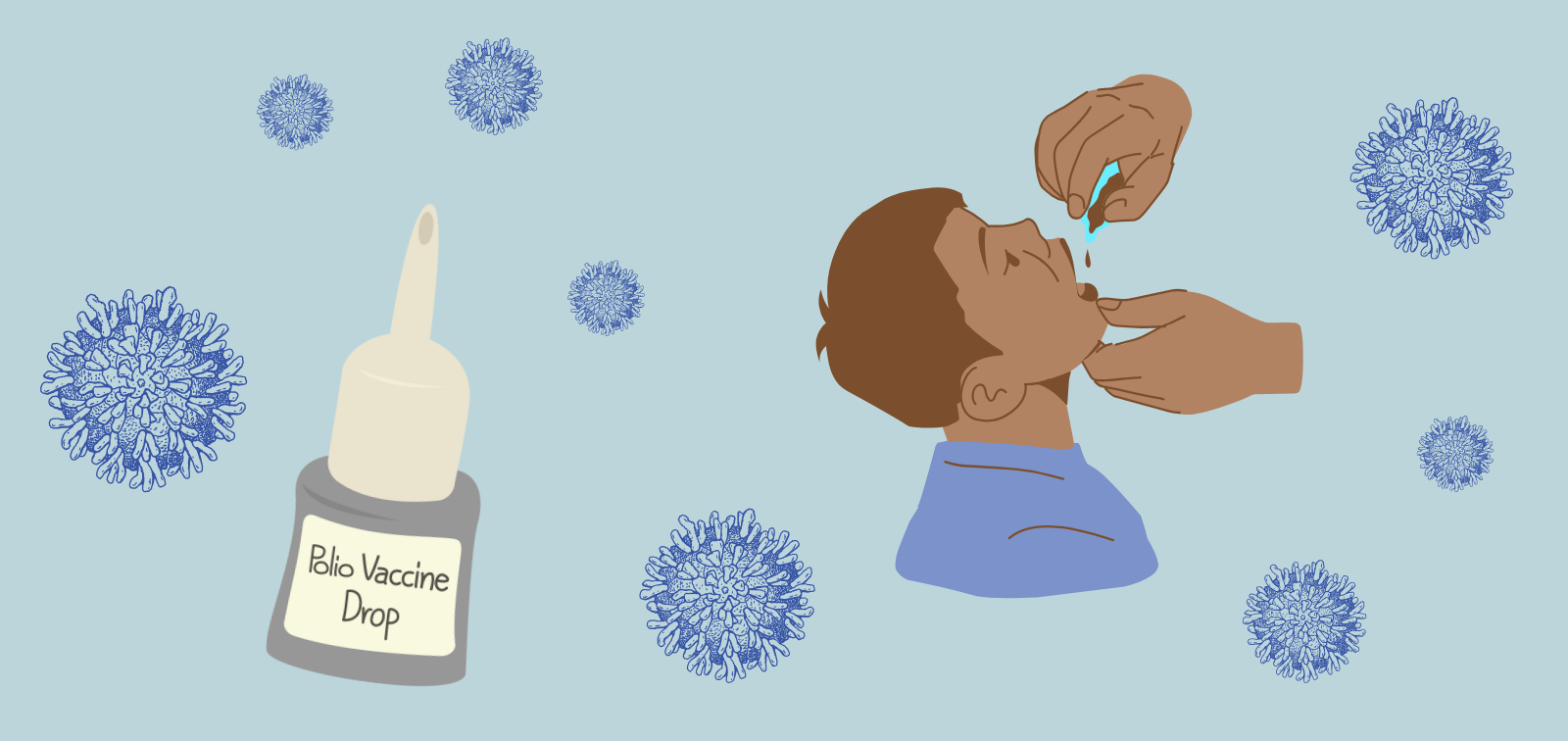
The most effective way to prevent polio is through vaccination. There are two types of vaccines: one administered intramuscularly with inactivated (killed) poliovirus, and another given orally using a weakened (attenuated) virus.
READ MORE
COLLAPSE
- What is Happening with Polio?(ISGlobal, 2022)
- Reflections on the World Polio Day. Innovative Responses to Emerging Challenges at the Edge of Success(ISGlobal, 2020)
- Polio Elimination in Africa: a Harbinger for Success(ISGlobal, 2020)
- Spanish Action Plan for Polio Eradication 2024-2028(Government of Spain, 2024)
- Polio Eradication Strategy 2022-2026(OMS, 2021)
MULTIMEDIA MATERIAL