

DNA Methylation
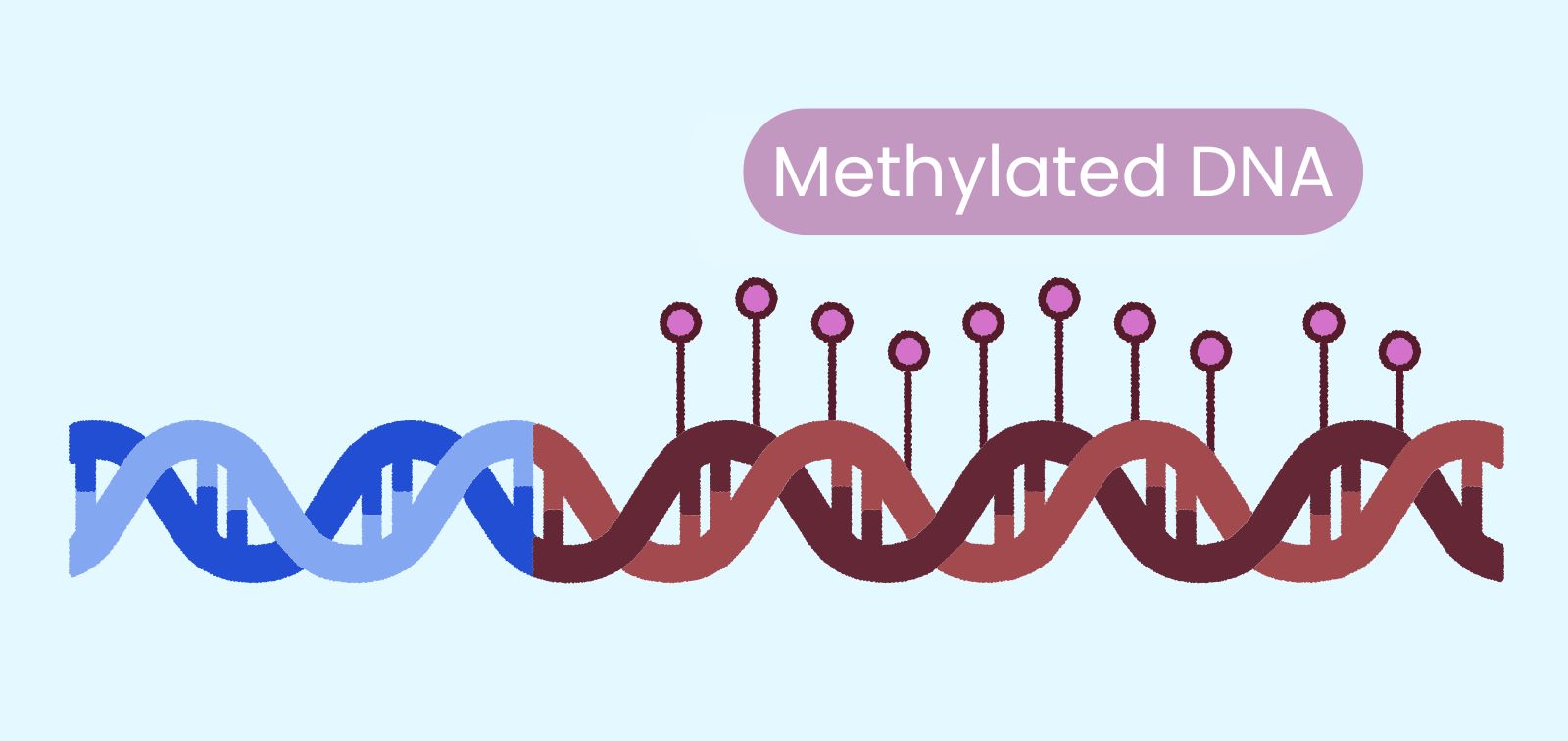
DNA methylation is a chemical modification of the genetic material. It is part of epigenetics, that is, the mechanisms that control how genes work without changing their information.
It consists of adding a small chemical group, the methyl group (one carbon atom and three hydrogen atoms), to cytosine, one of the four bases that make up DNA together with adenine (A), guanine (G) and thymine (T). These marks influence the chromatin —the structure in which DNA is packaged with proteins—, making it more compact or more open.
When chromatin becomes compacted, the genes in that region become less accessible and tend to be “switched off”. This is the most common effect of methylation: silencing genes that should not be active at that moment or in that cell type. In contrast, when the marks disappear, chromatin relaxes and the cellular machinery can read the corresponding gene more easily.
Although in most cases methylation is associated with silencing, its effects may vary depending on the region of the genome in which it occurs.
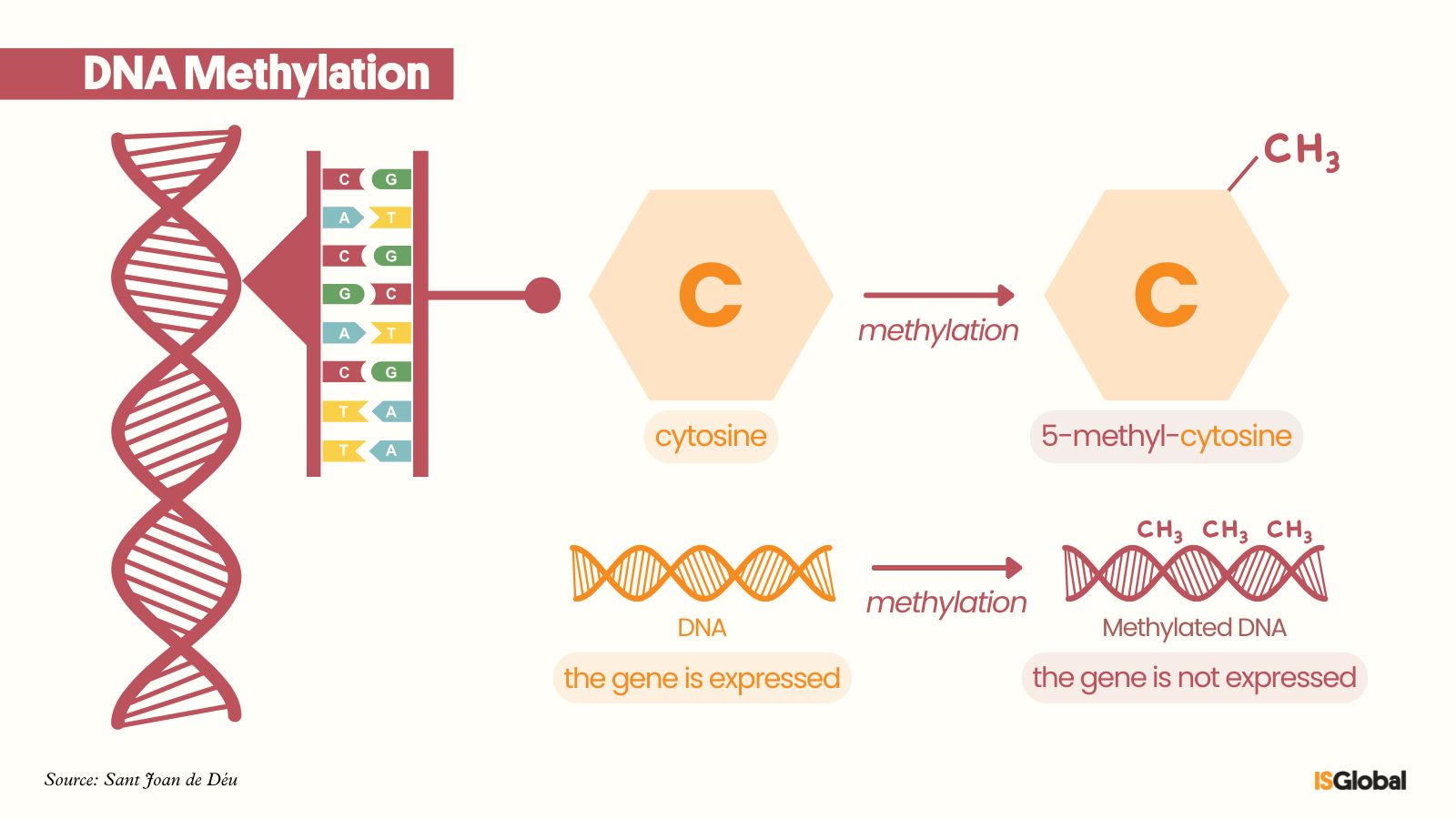
Using the analogy of an instruction book, without changing the content of the book (that is, the gene sequence), DNA methylation works like adding underlining or notes in the margins of certain pages. These marks do not alter the original text, but they do influence how the instructions are read.
DNA methylation occurs naturally in cells and is essential for development: thanks to it, cells with the same genetic information can specialise and perform different functions, such as forming muscle, skin or neurons.
Key functions of DNA methylation
- Controlling gene activity: it helps to “switch on” or “switch off” genes according to the needs of the cell. For example, during embryonic development, DNA methylation “switches off” genes that are only needed in early stages (at the beginning of development) so that they are not expressed later on, when they could interfere with the normal development of organs and tissues. In the immune system, methylation regulates the activation of genes in cells such as lymphocytes, enabling them to respond and defend the body against infections.
- Giving identity to cells: it allows each cell type to fulfil its specific function. Even though a muscle cell and a skin cell have the same DNA, methylation “indicates” which genes are activated in each one. In the skin, genes that produce keratin are activated, whereas in muscle, genes that allow contraction are switched on.
- Maintaining DNA stability: methylation helps preserve the integrity of the genome. On the one hand, it keeps repetitive sequences such as transposons silenced, as they can cause damage if activated. On the other hand, it helps prevent recombination or inappropriate activations that would endanger DNA stability, something especially important to prevent alterations related to cancer.
- Regulating the special inheritance of certain genes (genomic imprinting). Normally, we all have two copies of each gene: one inherited from the father and the other from the mother. In most cases, both copies are active. However, in some genes only one of the two copies must be active, while the other remains silenced thanks to methylation. This is called genomic imprinting. This mechanism ensures that certain genes function at the right dosage; if this balance is disrupted, growth disorders or rare diseases may appear, such as Prader-Willi syndrome or Angelman syndrome, which depend on which copy is inactivated, the maternal or the paternal one.
How does it affect health?
DNA methylation is necessary for development and the proper functioning of the body. It is part of normal processes, such as cell differentiation or adaptation to the environment. However, when these methylation patterns are inappropriately altered, they may promote the appearance of various diseases:
- Cancer: methylation can prevent a tumour-causing gene from being activated, thus preventing cancer. However, tumour suppressor genes can also be methylated, which silences these protective genes and may lead to cancer.
- Neurological problems: certain developmental disorders are linked to failures in the DNA methylation process. For example, in Rett syndrome, an alteration in the MECP2 gene prevents proper regulation of methylation. As a result, the brain does not develop correctly.
- Diabetes and cardiovascular diseases: some people with type 2 diabetes show changes in the methylation of genes that regulate the production and use of insulin. In atherosclerosis (plaque build-up in the arteries), altered methylation promotes inflammation and hardening of blood vessels, leading to cardiovascular diseases.
- Ageing: changes in methylation throughout life are even used as a “biological clock” to estimate cellular age.
External factors that alter DNA methylation
DNA methylation does not depend only on inherited genetics: it is also influenced by external factors such as diet, physical activity, exposure to pollutants, smoking, or stress. These stimuli can modify methylation in ways that, in some cases, help the cell adapt (for example, by activating genes that promote detoxification), while in others they may favour imbalances associated with disease.
For example, a balanced diet with nutrients such as folic acid and B-group vitamins is important, but excessive amounts can also alter methylation. Likewise, regular exercise induces changes that improve the function of certain genes, while chronic stress can leave persistent marks on genes that regulate the hormonal response. This is why it is said that our lifestyle habits can “leave a mark” on DNA, not by changing its sequence, but by modulating how it is expressed.
READ MORE
COLLAPSE
- Second-Hand Smoke Exposure During Childhood Leaves its Mark on Children's DNA(ISGlobal, 2025)
- Alcohol and Tobacco Use Lead to Major Epigenetic Changes(ISGlobal, 2023)
- A New study Provides Valuable Information on DNA Methylation and Gene Expression in Children(ISGlobal, 2022)
- Both Genetics and Environment Play a Role in DNA Methylation and Thereby in the Expression of Certain Genes(ISGlobal, 2022)
- Smoking During Pregnancy May Impact Fetal Growth through Changes in Placental Gene Expression(ISGlobal, 2021)
MULTIMEDIA MATERIAL